
Last updated October 15, 2026
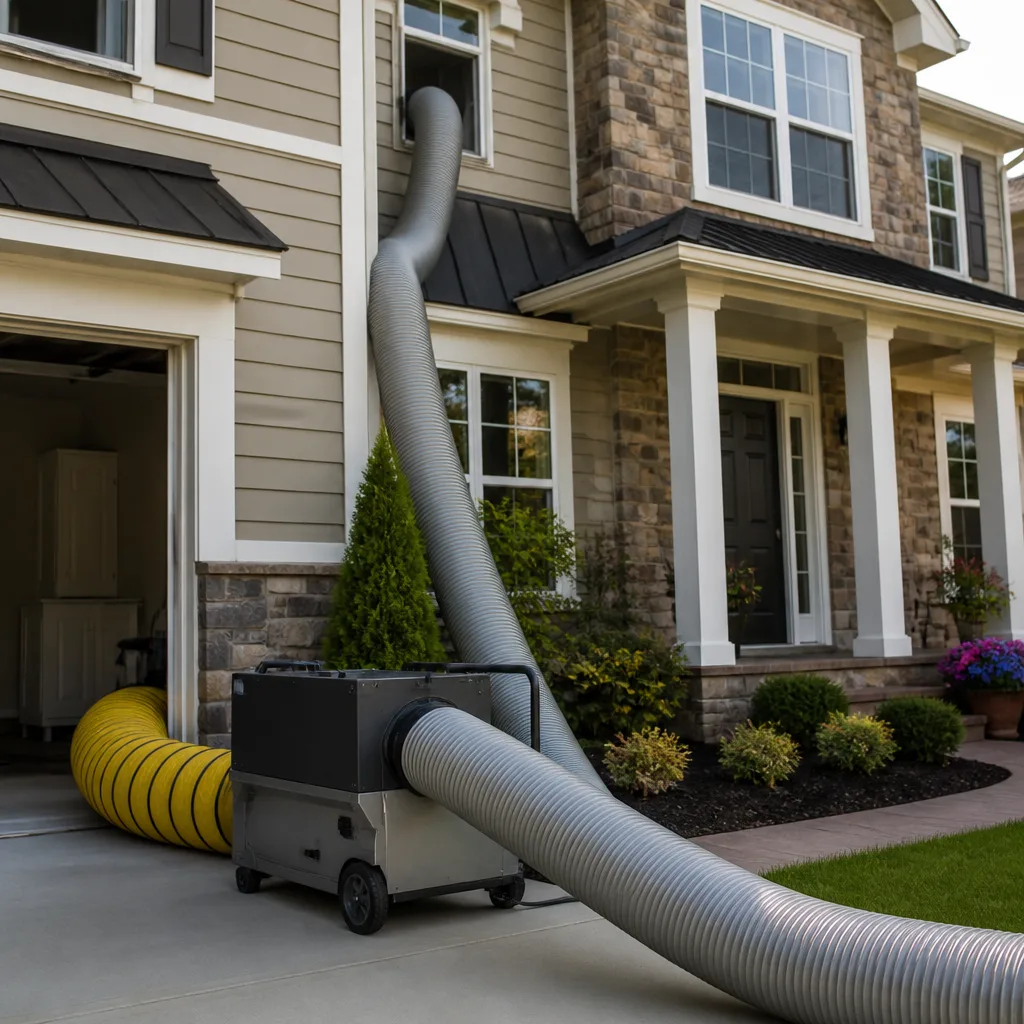 Whole-home duct cleaning
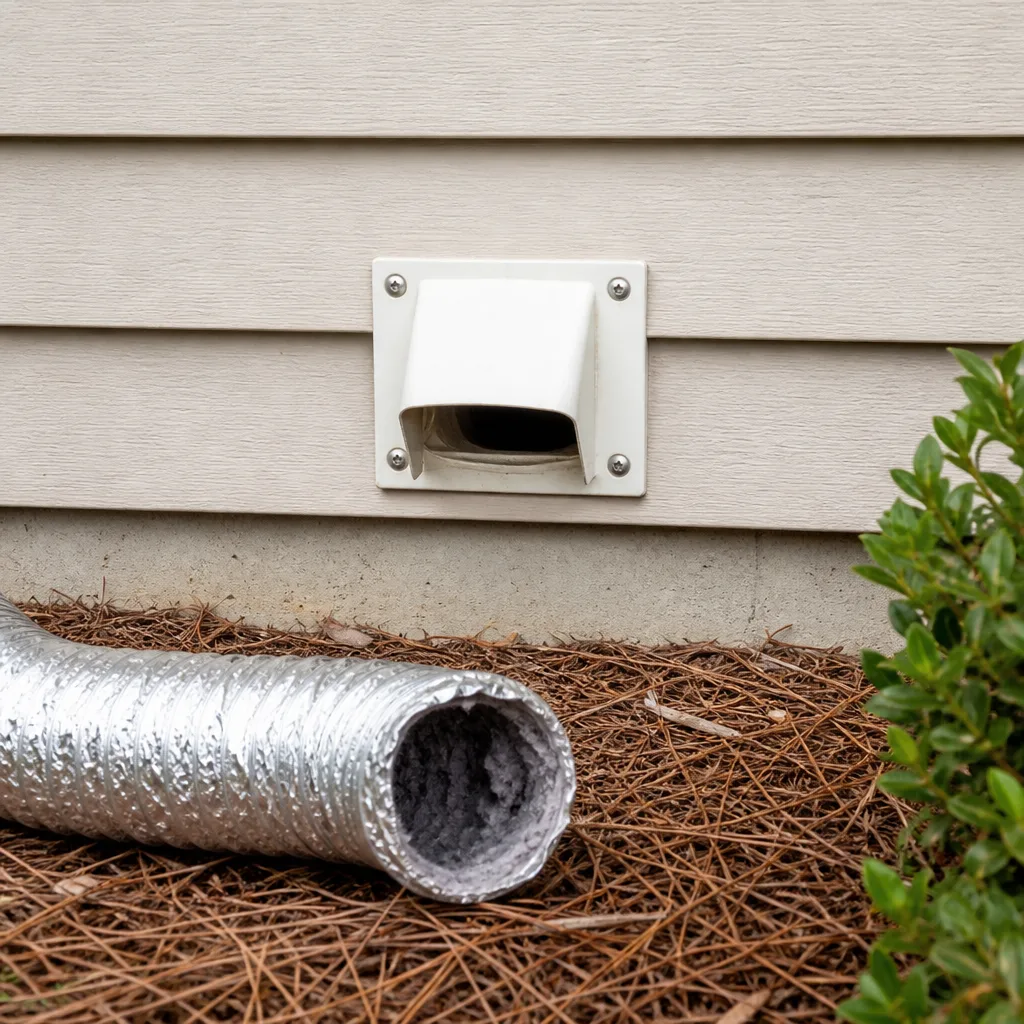 Dryer vent cleaning
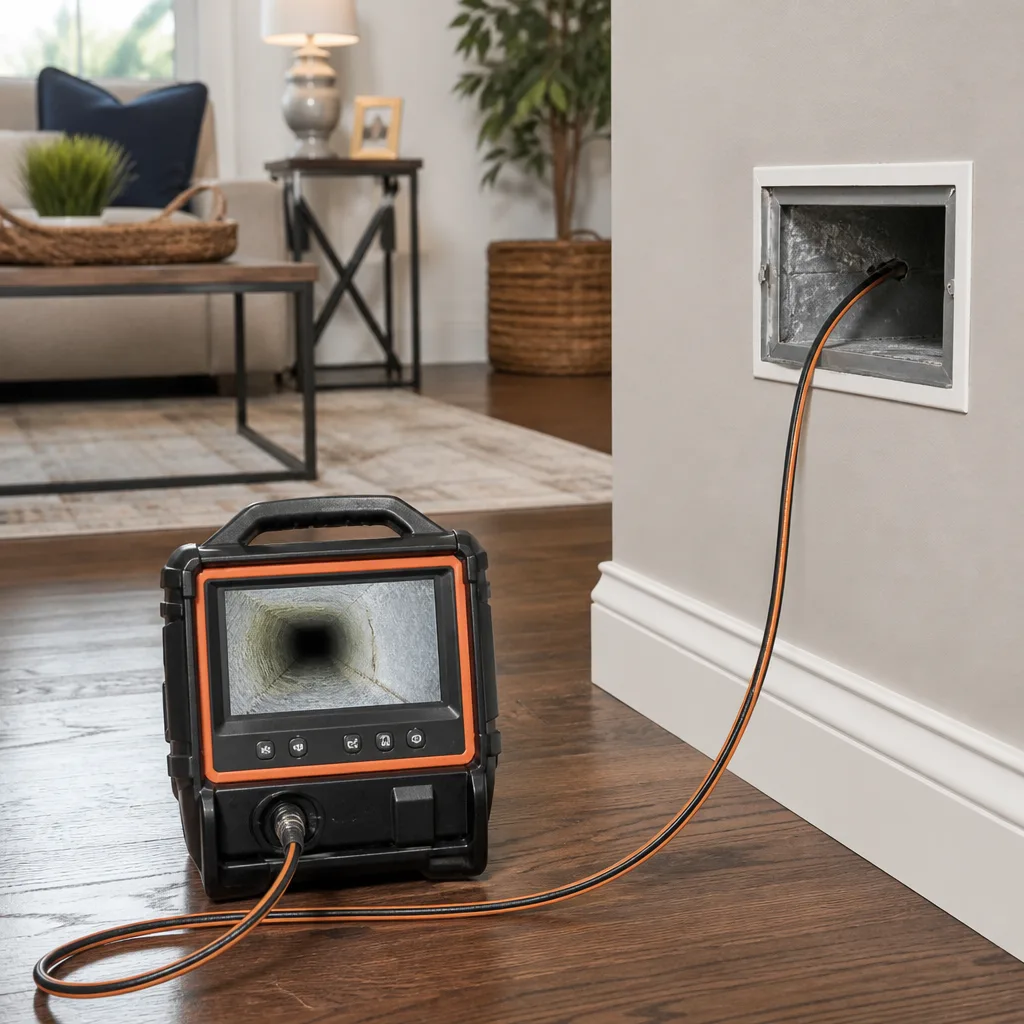 Camera inspection
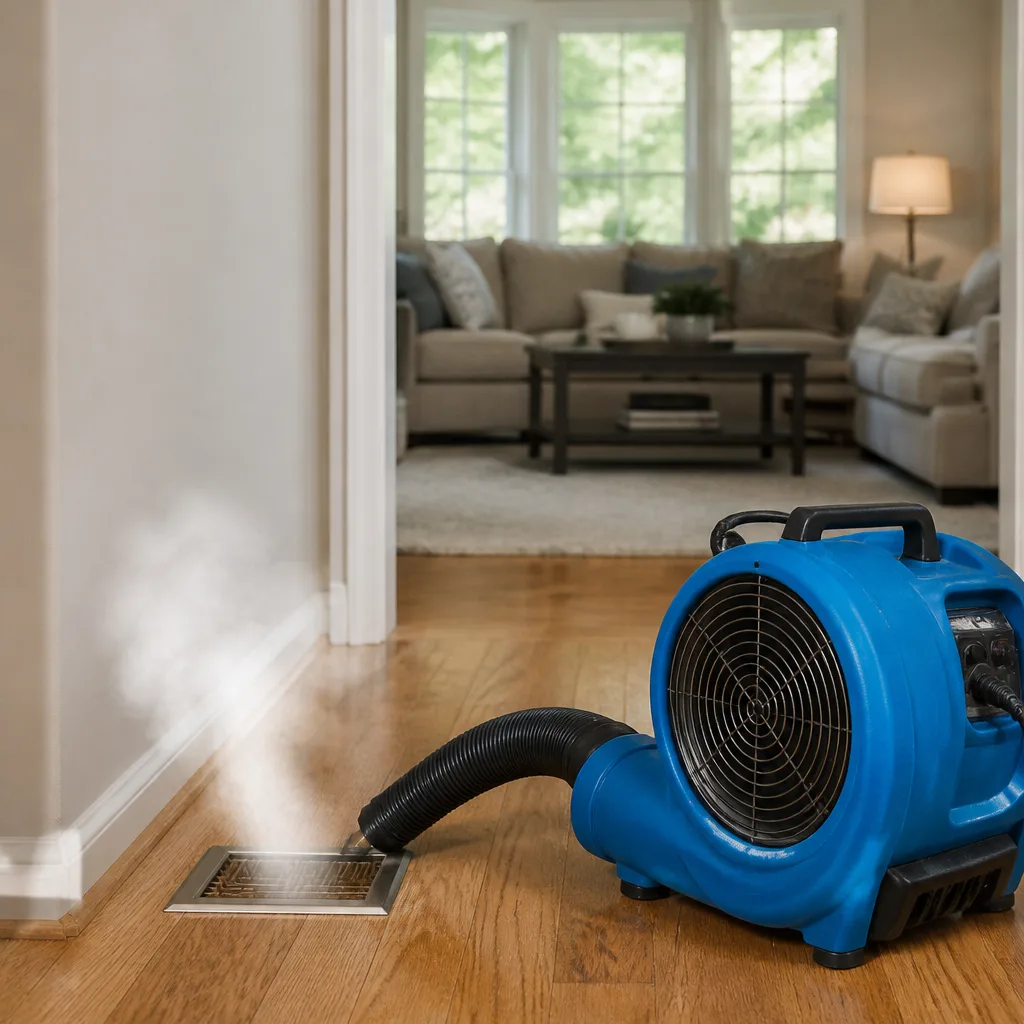 Sanitizing & deodorizing
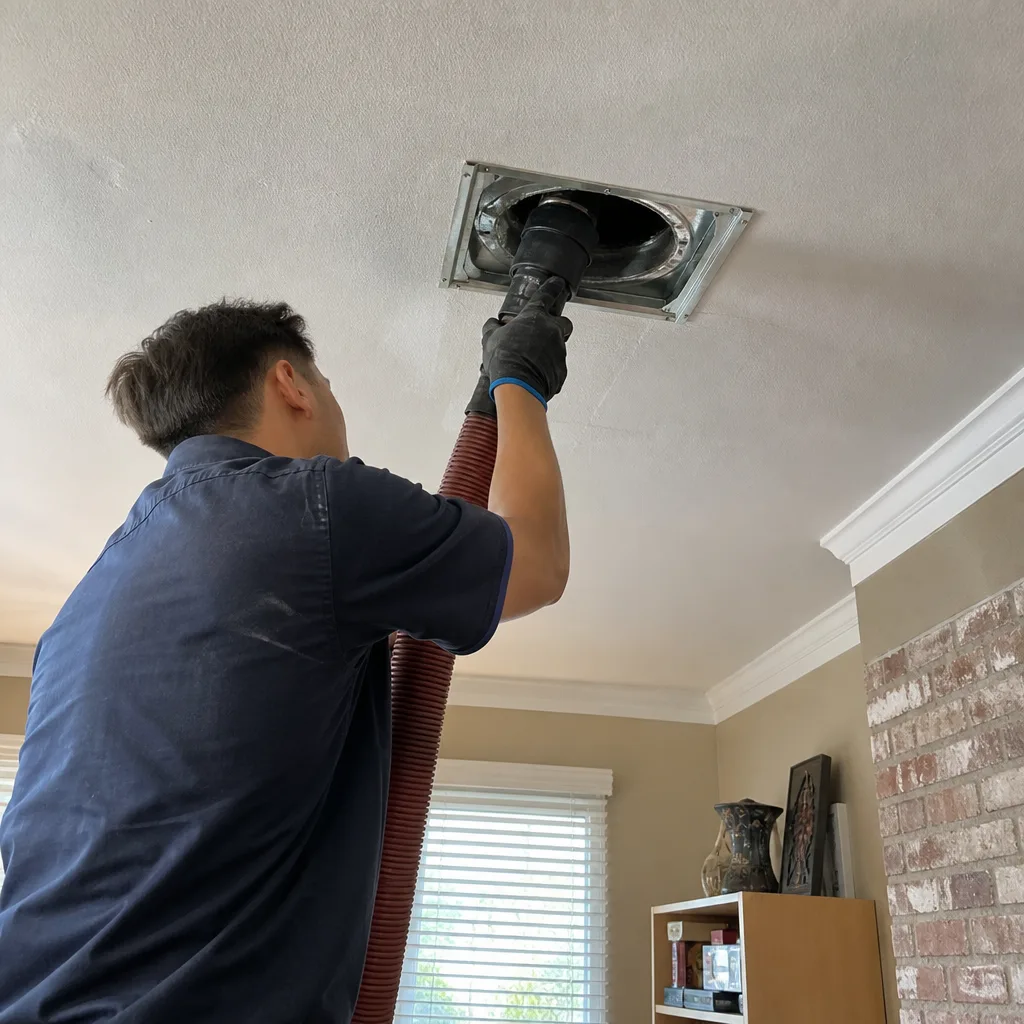
Whole-system duct and dryer vent check with before-and-after photos - you see exactly what came out of your vents
That "$99 whole-house special" is a bait ad - the real number appears once they are in your hallway, or the "clean" is a shop-vac at the register. We photograph the inside of your ducts before and after instead.
Air Duct Cleaning Warning Signs: A West Covina Homeowner’s Reference Guide
Most air duct warning sign lists are written to get you on the phone, not to help you figure out what’s actually wrong with your system. A burning smell and a musty smell get lumped together under “bad odors” on almost every website, but they require completely different responses. One might mean biological growth on your evaporator coil. The other could mean debris near your heat exchanger, which means you should shut the system down immediately. This guide from Cardinal Air Duct West Covina home maps each warning sign to its probable cause so you know whether you’re looking at a cleaning job, a repair job, or a call to a different trade entirely. West Covina homeowners deal with a specific set of conditions, from Santa Ana dust events to summer months when the AC runs for weeks straight, and those conditions shape what we see inside duct systems across the San Gabriel Valley.
Quick Answer
The clearest warning signs that your West Covina home needs air duct cleaning are: visible dust accumulation on supply register faces within days of cleaning, a persistent musty or stale smell when the blower kicks on, rooms that stay noticeably warmer or cooler than the rest of the house, and a jump in your monthly energy bill without a matching change in usage. A typical whole-system air duct cleaning in West Covina runs $400 – $700 for a standard single-family home, and if you’re seeing any of these signs, you should document them first, then call for a professional assessment.
Styles & brands we work with
Table of Contents
- Visible Dust at Supply Registers: Dirty Ducts or a Filter Problem
- The Musty Smell From Registers: What That Odor Actually Points To
- A Burning Smell: Stop the System and Read This Before Calling Anyone
- Uneven Room Temperatures: Collapsed Flex Duct or Disconnected Trunk Line
- The West Covina-Specific Sign: Santa Ana Grit on Horizontal Register Faces
- How to Use a Flashlight and Phone Camera to Document What’s Visible
- When Warning Signs Point Away From Duct Cleaning Entirely
Visible Dust at Supply Registers: Dirty Ducts or a Filter Problem
You wipe down a supply register on a Tuesday and by Friday there’s a fine gray film on it again. In West Covina, especially in neighborhoods closer to the foothills like South Hills or along the 10 corridor, this is one of the most common complaints we hear. But visible dust at the register doesn’t automatically mean your ducts are packed with debris. It means one of three things, and they’re different enough that you should diagnose before you spend money.
The first possibility is that your return-air filter is doing what’s called “bypass.” That means air is flowing around the filter instead of through it, which happens when the filter doesn’t seat properly in its track, when the filter frame is bent, or when someone installed a 1-inch filter in a slot sized for a 2-inch or 4-inch media filter. We see this constantly in West Covina homes built in the 1980s and 90s, where original filter racks have warped over decades of heat. When bypass happens, unfiltered air reaches the blower, gets pushed through the evaporator coil, and exits your supply registers along with whatever was floating in the air. The ducts themselves might be relatively clean, meaning a duct cleaning alone won’t fix the symptom.
The second possibility is that the ducts genuinely are carrying dust from the return side to the supply side. This happens when years of dust, pet hair, and debris accumulate inside the return plenum and trunk lines. The blower picks up that material and deposits it at the supply registers, which is why you see it on the register faces rather than evenly distributed across the room. Gravity does some of the work too: horizontal register faces collect more visible dust than vertical wall registers, simply because dust settles there.
The third possibility, and the one most often missed, is a return-air leak in the attic or crawlspace. If your return duct has a loose connection, a tear, or a section that has pulled apart, the system pulls attic air, crawlspace air, or garage air directly into the return side. In West Covina, where summer attic temperatures can exceed 130°F, that leak also makes your AC work harder than it should. The dust you see at the supply register might be insulation fibers or attic particulate being pulled into the system. No amount of duct cleaning fixes a return-air leak, because the system keeps pulling contaminated air in from outside the duct network.
Here’s the practical way to narrow it down. Check your filter first. If it’s collapsed, undersized, or visibly not seated, fix that before scheduling anything. Then pull a register off and wipe the inside of the boot with a clean white cloth. If the cloth comes back with gray dust heavily mixed with visible fibers, you may be looking at an attic-side return leak rather than simply dirty ducts.
What Dirty Supply Register Dust Tells You
- Dust appears within 2 – 3 days of cleaning: The system is circulating debris, not just redistributing room dust. Start by checking filter fit and return duct integrity.
- Dust appears only on certain registers, not all: That points to a localized issue in one branch run, often a disconnected flex duct segment or a crushed flex duct restricting airflow.
- Dust is greasy or sticky rather than dry: This can indicate cooking residue from an under-vented range hood that recirculates into the return path, common in kitchens without exterior-venting exhaust.
- Dust has pink or black specks: Pink specks are often fiberglass insulation. Black specks can be soot from a gas appliance or a failing blower motor. Both warrant a closer look.
If you’re in West Covina and seeing persistent register dust, document it with your phone before you call anyone. A professional air duct cleaning in West Covina should include an inspection that answers the filter-fit and return-leak questions, not just a vacuum pass through the ducts. Omar Haddad and the team at Cardinal Air Duct West Covina do exactly that, because cleaning ducts that are being recontaminated by a leak means you’re paying for a temporary fix.
The Musty Smell From Registers: What That Odor Actually Points To
A musty smell that appears when the blower runs and fades when the system is off is a classic warning sign. But the smell itself is nearly useless as a diagnosis until you know where it’s coming from. In our experience serving West Covina, the musty odor most often originates in one of three places: the evaporator coil, the condensate drain pan, or the interior surfaces of the duct liner. Each requires a different response.
During a West Covina summer, the evaporator coil runs cold and wet for months at a time. The coil sits in the air handler above the drain pan, condensing moisture out of the air. When dust collects on that wet coil, it becomes a growth medium. The result is a biological film that produces that damp, earthy, sometimes dirty-sock smell. West Covina’s seasonal humidity, especially during late summer monsoon-influenced weather patterns, makes this worse. The fix here is a proper coil cleaning, which is part of a comprehensive HVAC cleaning in West Covina, not just a duct pass. Note that some online lists call duct cleaning the answer to musty smells, but if the growth is on the coil, running a brush through the supply ducts alone does nothing for it.
The second source is the drain pan. When the drain line clogs, water backs up and sits in the pan. That standing water, combined with whatever dust and debris settles into it, produces a distinct odor that gets pushed through the system by the blower. In West Covina homes where the air handler sits in the garage or an attic closet, we’ve found pans holding several inches of water, which also raises the humidity inside the equipment cabinet and accelerates corrosion. Clearing the drain line and cleaning the pan resolves this, and it’s a repair task more than a cleaning task, though it’s often bundled together.
The third source is microbial growth on the interior surfaces of the ductwork itself, particularly fiberglass-lined ducts or ducts that have been exposed to moisture from a past leak. This is the scenario where duct cleaning is the direct answer, especially when combined with a sanitizing treatment. The key diagnostic clue is whether the smell intensifies when the blower runs and whether it’s stronger at certain supply registers than others. If it’s consistent from every register, suspect the coil or pan. If it’s strong at just a couple of registers, suspect the branch duct serving those rooms.
What should you do before calling anyone? Run the system for ten minutes, then go to the register closest to the air handler. Sniff. Then check a register at the far end of the longest duct run. The difference between those two tells you a lot. Write down which registers smell, when the smell appears, and whether it’s stronger in cooling mode or heating mode. That information lets a technician narrow the problem before pulling out equipment.
A Burning Smell: Stop the System and Read This Before Calling Anyone
If you smell something burning from your vents, this is not a duct cleaning issue. Turn the system off at the thermostat and, if the smell is strong, at the breaker. Do not run it again until someone has looked at it. This section matters because too many West Covina homeowners, having seen “burning smell” on a generic warning signs list, assume it points to dirty ducts and schedule a cleaning when the real problem is far more serious.
There are three common causes of a burning smell from the HVAC system, and only one of them has anything to do with debris that cleaning might address. The first, and most benign, is dust burning off the heat exchanger or electric heating elements at the start of the heating season. If the system has sat unused since the previous winter, a fine layer of dust settles on the heating surfaces. The first time it fires up, that dust burns off and produces a smell that should fade within twenty to thirty minutes. This is normal and does not require cleaning, though if the smell persists beyond an hour or recurs every time the system runs, keep reading.
The second cause is debris inside the furnace cabinet or near the heat exchanger. This can include pet hair, lint, and paper that has been drawn into the return and settled near the burner assembly. This is a fire hazard, and it’s also an indication that the return-air path is pulling from an unconditioned space like a garage or laundry room. Cleaning the blower cabinet and inspecting the heat exchanger area is not the same as duct cleaning, though a reputable service will often address both during a full HVAC cleaning.
The third and most serious cause is a cracked heat exchanger. When the heat exchanger develops a crack, combustion gases can enter the airstream. The smell may be acrid or chemical rather than simply dusty. Some homeowners describe it as a smell like burning plastic or a sharp, irritating odor. A cracked heat exchanger is a carbon monoxide risk. This is not something any duct cleaning addresses, and you should not operate the furnace until a licensed HVAC technician has inspected it.
Here’s the practical takeaway for West Covina homeowners. If the burning smell appears the first time you switch the system to heat in October or November and disappears within half an hour, it’s almost certainly normal seasonal dust burn-off. If the smell persists, appears mid-season, or is accompanied by visible soot around the registers or unusual noises from the furnace, shut it down and call a licensed HVAC company. Tell them specifically you’re concerned about a possible heat exchanger issue so they send the right person with the right test equipment. A duct cleaning company that offers to solve a persistent burning smell with a brush pass is not doing you any favors.
Uneven Room Temperatures: Collapsed Flex Duct or Disconnected Trunk Line
Every house has a room that runs warmer in summer or cooler in winter. But when the temperature difference between rooms is more than a few degrees, or when a room that used to stay comfortable suddenly doesn’t, the cause is often physical damage inside the duct system, not dirty ducts. West Covina homes built with flex duct runs, particularly single-story ranchers in the neighborhoods around Cameron Park and the Civic Center area, are prone to two specific failures.
The first is collapsed flex duct. Flex duct is the flexible, insulated tubing that connects the main trunk line to individual supply registers. It’s held in place by straps and must have a certain amount of tension to keep its round shape and full diameter. When straps fail, when the duct was installed with excessive sag, or when someone walking or crawling through the attic steps on a duct run, the inner liner can kink or collapse. A collapsed flex duct can cut airflow to a room by half or more. The room gets stuffy, the register blows weak air, and no amount of duct cleaning through that constricted passage will solve it. The repair is to replace or re-strap the affected duct segment.
The second is a disconnected trunk line connection. Where the flex duct connects to the sheet metal trunk or to the register boot, the connection is sealed with tape, mastic, or a plastic zip tie. Over years of thermal cycling, that connection can pull loose. When it does, conditioned air pours into the attic instead of the room, and the room never reaches temperature. The telltale sign is a register with almost no airflow while the system runs, combined with an attic that’s unusually warm in winter or cool in summer. A disconnected trunk line also draws attic air back into the system when the blower cycles, which reintroduces dust and insulation into the supply side.
Here’s how to check. With the system running, hold a tissue or a thin piece of paper near each supply register. Compare the airflow between rooms. If one room has dramatically less airflow, note that. Then check whether the weak register is served by a flex duct run that travels through the attic. If so, the problem is more likely physical than it is a buildup of dust inside the ducts. Cleaning the ducts in that scenario is like washing a car with a flat tire.
We’ve walked West Covina attics where flex duct was draped over roof trusses like spaghetti, crushed under boxes of Christmas decorations, and one where a raccoon had torn through a duct run entirely. The point is simple: uneven room temperatures are a diagnostic sign that points toward airflow restriction, and airflow restriction has a specific physical cause you can find and fix. Our team checks for these mechanical issues during every air duct cleaning in West Covina, because running a cleaning brush through a system with a collapsed duct would be a waste of your money.
Quick Diagnostic Checklist for Uneven Room Temperatures
- Turn the system on and let it run for 15 minutes.
- Check the airflow at each register with a tissue or paper strip. The tissue should flutter noticeably if airflow is adequate.
- Identify which rooms have weak airflow. Mark those registers.
- Determine whether the weak registers are on the same duct run or different runs.
- Check whether the weak rooms are the farthest from the air handler, which can also indicate inadequate duct sizing rather than a blockage.
- Look at the registers themselves. If a damper is partially closed, open it and recheck.
- If airflow is still weak with the damper open, the restriction is inside the duct run or at the connection. That’s the point to bring in a professional.
The West Covina-Specific Sign: Santa Ana Grit on Horizontal Register Faces
West Covina has a weather pattern most of the country doesn’t share: the Santa Ana winds. Between September and January, hot, dry wind blows from the high desert toward the coast, carrying fine particulate across the San Gabriel Valley. West Covina sits directly in that path, and the grit that settles on cars and patios during a Santa Ana event also finds its way into your HVAC system.
Here’s the specific warning sign we see in West Covina that generic national content never mentions. After a Santa Ana wind event, go look at your horizontal register faces, especially floor registers. You’ll see a fine layer of tan or gray grit. Now ask a simple question: is that grit sitting on top of the register face, or has it accumulated inside the register opening? Surface grit on the register face is normal, even in a clean home, because the wind event deposits dust on every horizontal surface inside and out. Grit that has accumulated inside the register boot, below the register face, tells a different story.
What that interior grit often indicates is a compromised filter seal. During Santa Ana events, the return side pulls in the windblown dust along with the rest of the house air. If your filter is doing its job and sealing properly, that dust lands on the filter, not in the ducts. If the filter is bypassing, the dust enters the blower, coats the coil, and works its way toward the supply registers. The interior grit you see after a wind event is evidence of that bypass, and it means the system has been circulating unfiltered air during the worst particulate conditions of the year.
Over time, repeated Santa Ana seasons without a proper filter seal build up a layer of fine dust inside the supply duct runs. That dust becomes reservoir material: every time the blower kicks on, it stirs a portion of that dust back into the air you breathe. West Covina homeowners who track their filter life often notice the filter gets dirty faster than expected in November and December, which is consistent with this pattern.
The practical recommendation is twofold. First, after any significant Santa Ana event, check your filter. If it’s visibly packed with dust after only a few weeks, the filter is doing its job but the event was heavy. If the filter looks only mildly dusty but the register interiors are coated with grit, suspect bypass. Second, consider upgrading to a higher-MERV filter during wind season, something in the MERV 11 – 13 range if your system can handle the static pressure. We install Aprilaire media filters and Guardsman filtration products on systems across West Covina for exactly this reason, and we’ve seen them dramatically reduce the amount of windblown particulate that reaches the coil and ducts.
How to Use a Flashlight and Phone Camera to Document What’s Visible
You don’t need a scope camera to gather useful diagnostic information from your duct system. A bright flashlight and a phone camera will do the job for the first few feet of any duct run, and that’s often enough to identify a problem worth a professional visit. Here’s the method we recommend to West Covina homeowners who want useful documentation before calling for a quote.
Start by gathering the right tools. A bright LED flashlight with a narrow beam works best. Your phone camera with flash enabled is the documentation tool. If you have a selfie stick or a small inspection mirror, use them to angle the camera past the register opening. Turn the system off before removing any register, because you don’t want the blower pushing air into your face while you’re working.
Remove the supply register and shine the flashlight into the boot, which is the metal or plastic fitting the register screws into. Photograph what you see. Look for accumulated dust, obvious debris, visible mold or discoloration, and any signs that the duct has pulled away from the boot. Then extend the camera into the duct run if the design allows. Many floor registers open directly into a short boot that connects to a flex duct run, and with the right angle you can photograph several feet into that run. What that image shows you is limited to the visible interior of that specific branch run. It cannot show you the trunk line, the far side of the coil, or the return plenum. Be clear-eyed about that limitation: a clean-looking first few feet of one duct run doesn’t prove the system is clean, and a dirty-looking run doesn’t tell you how far the buildup extends.
Document the return side too. Find the return register or grille, remove it, and photograph the return plenum behind it. This is often the dirtiest part of the system because everything in the air passes through here before reaching the filter and coil. If you see heavy dust on the return side but clean supply registers, that’s a sign the filter has been doing its job and the system may only need a light cleaning. If the supply side looks as dirty as the return side, bypass has been happening and the whole system has been circulating unfiltered air.
Email those photos to yourself or label them clearly in your camera roll. When you call a duct cleaning company in West Covina, describe what you photographed. At Cardinal Air Duct West Covina, we ask homeowners to share their photos before we send a technician, because it gives us a better sense of what equipment and what approach the job will need. The Relay Standard means every booking gets a live trackable arrival time and a written price before any work starts, and homeowner documentation makes that written price more accurate from the first quote.
When Warning Signs Point Away From Duct Cleaning Entirely
Not every symptom that sounds like a duct problem is a duct problem. This section covers the three most common misdiagnoses we see in West Covina, because calling a duct cleaner for a refrigerant leak is like calling a painter for a roof leak. The painter might paint it, but the problem isn’t solved.
Refrigerant issues. If your AC runs constantly, the air coming from the registers is warm or only slightly cool, and your energy bill is climbing, the problem is often low refrigerant, not dirty ducts. Low refrigerant causes the evaporator coil to freeze, which restricts airflow and reduces cooling capacity. A frozen coil can also cause water damage around the air handler when it thaws. Duct cleaning has zero effect on refrigerant charge. You need an HVAC service call to find the leak, repair it, and recharge the system. West Covina summers push AC systems hard, and homes with original R-22 systems are at the age where slow leaks are common.
Heat exchanger failure. We covered the burning smell above, but the broader point is that any symptom related to combustion, exhaust, or gas should go to a licensed HVAC technician, not a duct cleaning crew. A cracked heat exchanger, a blocked flue, or a gas leak are all safety issues that require specialized testing. No reputable duct cleaning company will suggest cleaning as the fix for these symptoms.
Return-air leaks in the attic. If you have a musty smell, visible dust, and uneven temperatures all at once, and the system is a few decades old, the cause is often a return-air leak in the attic or crawlspace. When the return duct pulls air from an unconditioned space, it introduces heat, humidity, dust, and whatever else is in that space directly into the system. The fix is sealing the return path, which may involve duct replacement or mastic sealing at the connections. Cleaning the ducts without addressing the leak means the system re-contaminates itself within weeks. At Cardinal Air Duct West Covina, we flag return-air leaks during the inspection portion of every HVAC cleaning in West Covina, because telling a homeowner their ducts need cleaning when the real issue is a torn return duct would be dishonest work.
And one more worth mentioning: dryer vent cleaning in West Covina is its own service with its own warning signs. If your dryer takes two cycles to dry a load, the issue is the dryer vent, not the HVAC system. We clean dryer vents as a separate service because the vent run, the tools, and the access points are different from the HVAC duct system. Mixing the two up leads to spending money on the wrong service.
Common Mistakes to Avoid
- Assuming a burning smell is just dust in the ducts. Running your system with a burning smell can compound a minor issue into a major repair, and in the case of a cracked heat exchanger, it’s a safety hazard. Rule out combustion issues first.
- Replacing the filter without checking the fit. A new filter that doesn’t seat properly creates the same bypass problem as a dirty filter. West Covina homes with older filter racks often need the rack itself repaired or replaced before the filter can do its job.
- Cleaning only the supply side. The return side is where most debris enters the system. If a duct cleaning company only runs tools through the supply registers, they’re leaving the return plenum and trunk untouched, and the system re-contaminates quickly.
- Ignoring Santa Ana season filter changes. The particulate load during wind events is concentrated and heavy. A filter that would normally last three months can be saturated in three weeks. Check it after every major wind event.
- Treating every register smell as the same problem. A musty smell from the coil area is a biological issue. A burning smell from the furnace is a combustion issue. They require different trades and different tools. Document what you smell, where you smell it, and when it appears.
- Using duct cleaning as a substitute for leak detection. If your AC is blowing warm air or freezing up, the problem is refrigerant, not dust. A cleaning will not restore cooling capacity.
- Trusting a quote given sight unseen over the phone. Any company that quotes you a firm price without looking at your system, your access points, and your duct layout is guessing. Cardinal Air Duct West Covina provides a written price before work begins, based on an actual assessment of your system.
See the difference
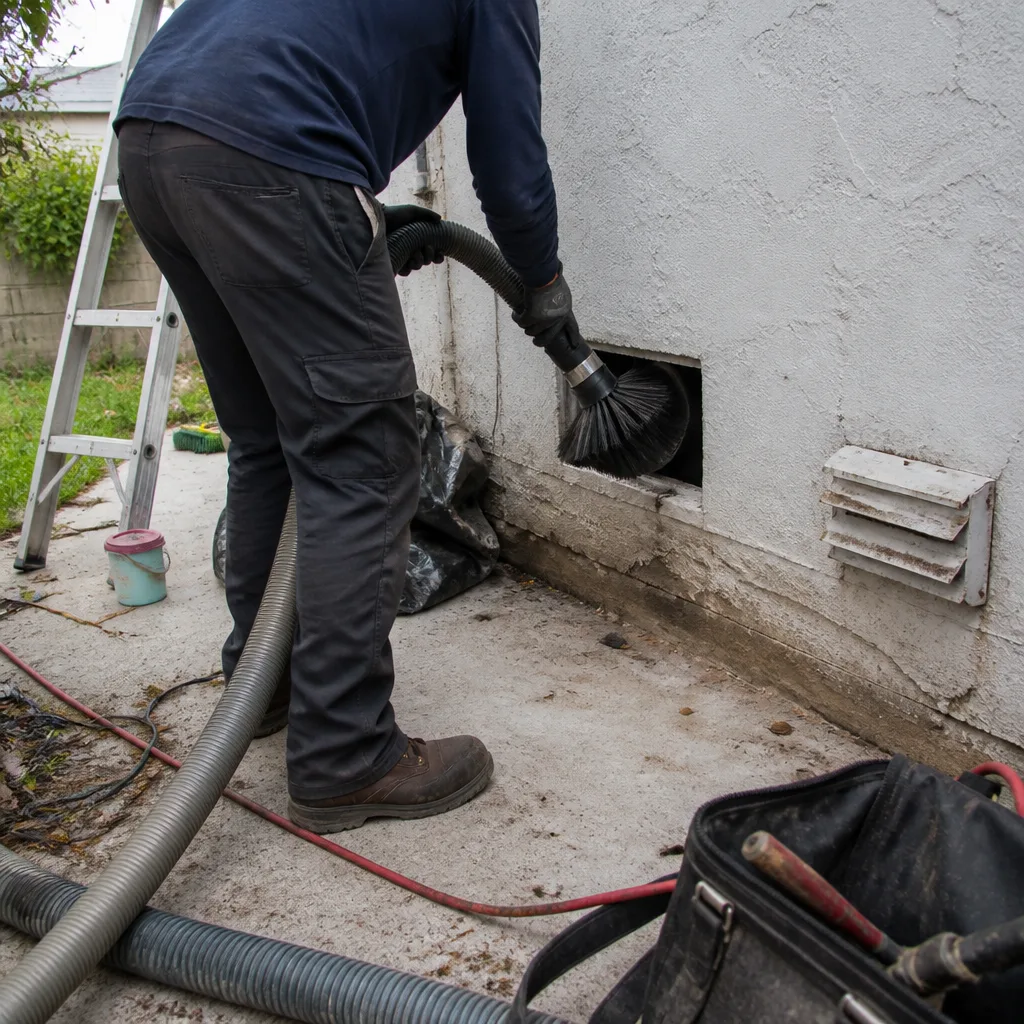 Before
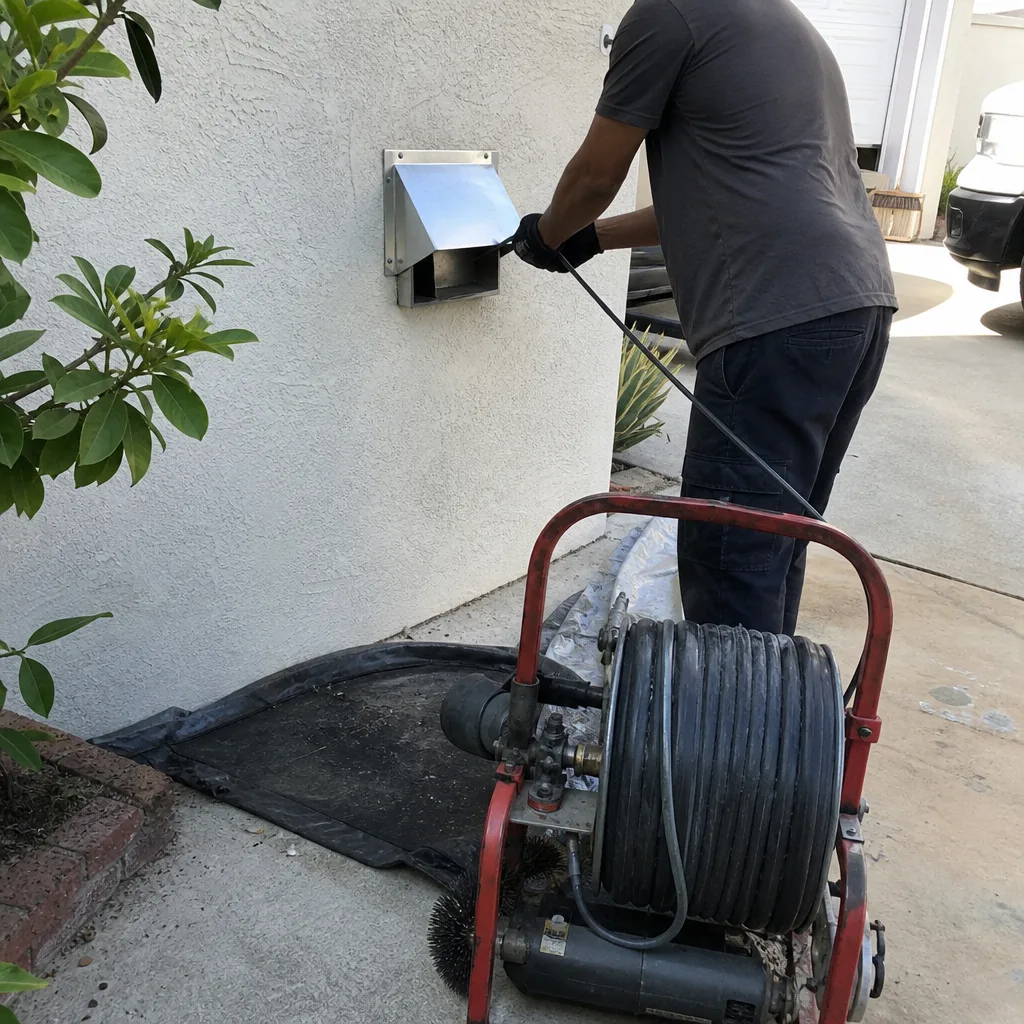 After
After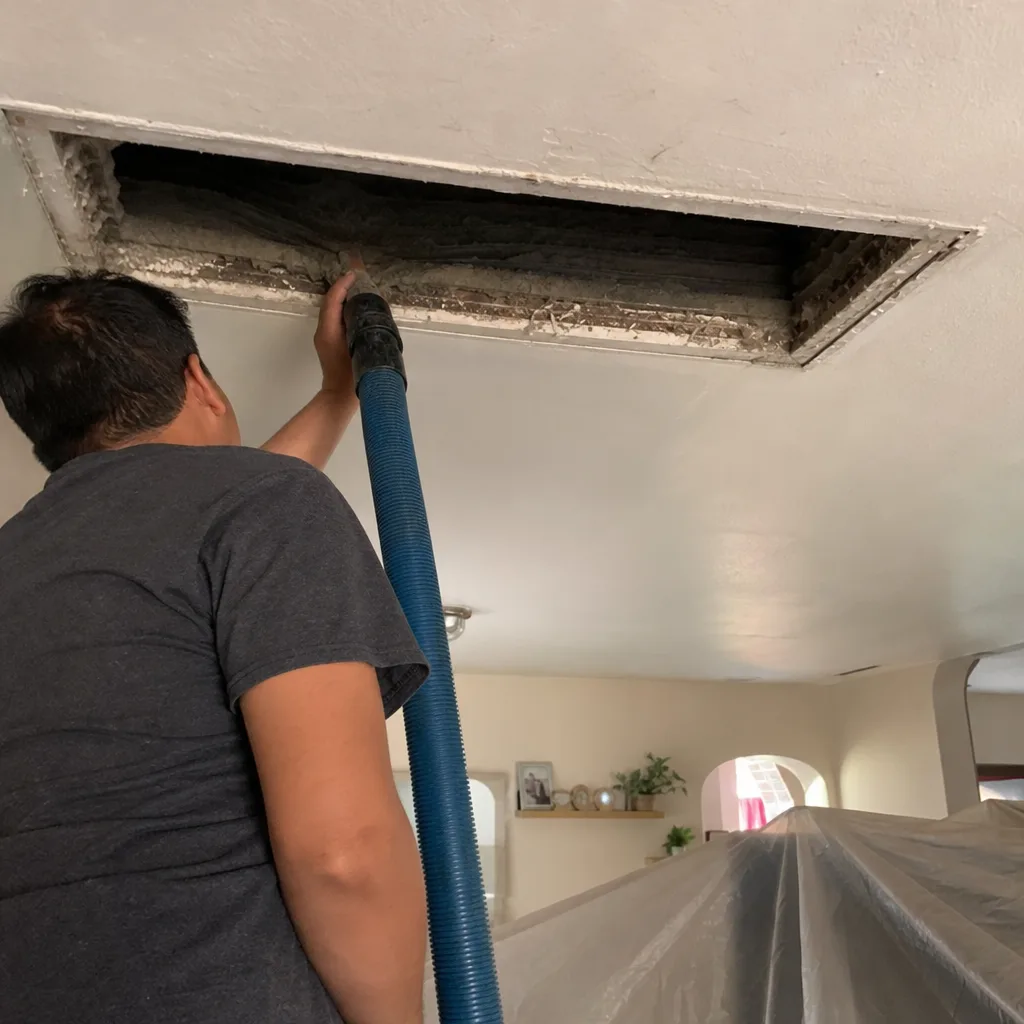 Before
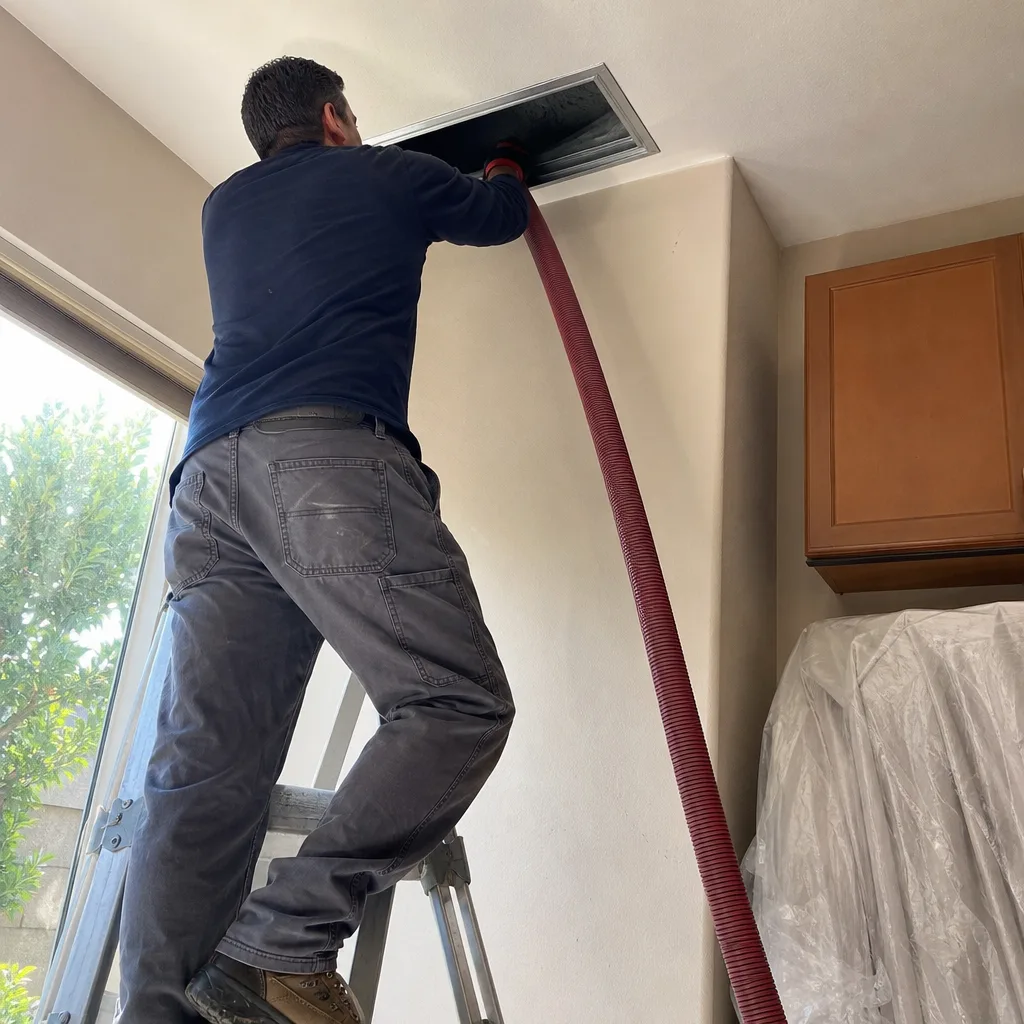 After
After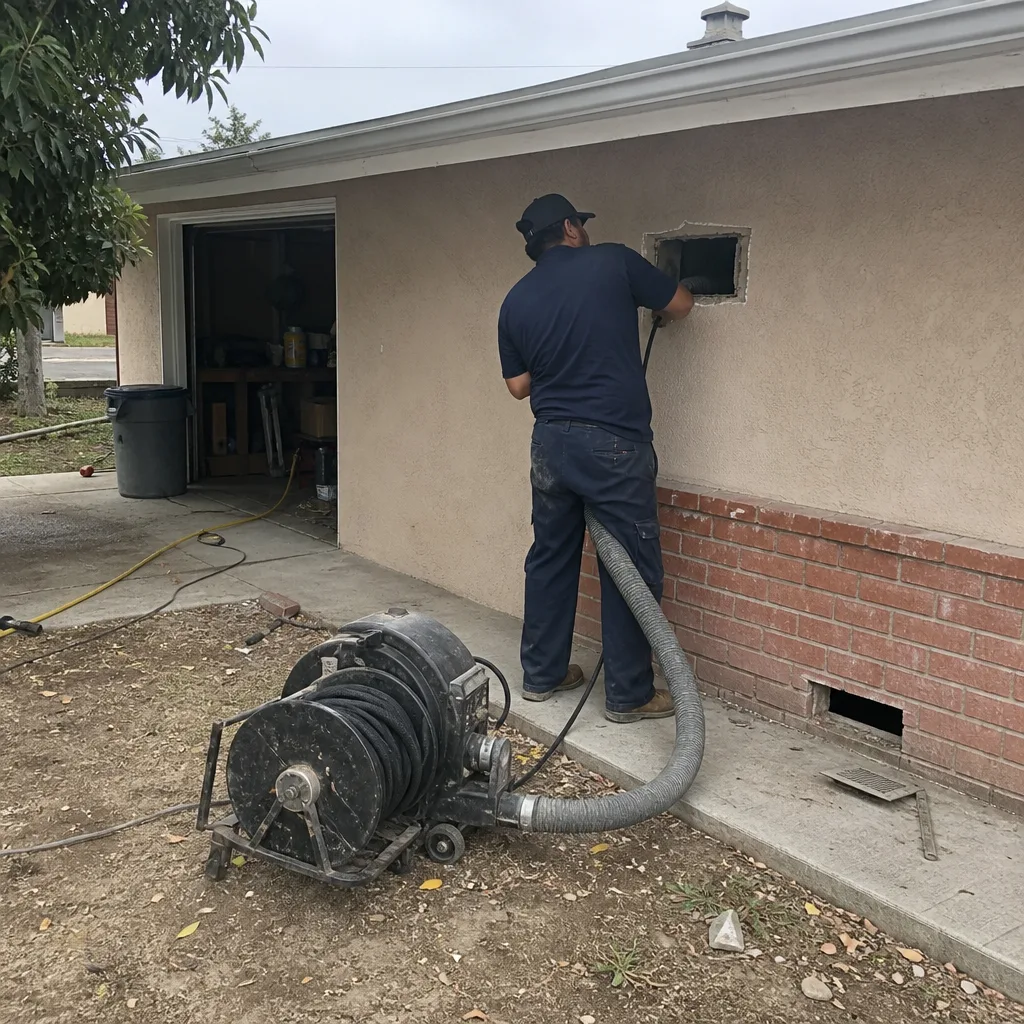 Before
 After
AfterWhen to Call a Professional
Call when you’ve done the basic checks and the symptoms persist. That means you’ve confirmed the filter is dirty or bypassing, you’ve noted which registers have weak airflow or visible dust, you’ve documented what you can see with a flashlight, and the problem isn’t explained by a simple fix. Also call immediately if you smell burning that doesn’t fade within thirty minutes of switching to heat mode, if you see moisture or visible mold around the air handler or inside a register boot, or if rooms are consistently more than a few degrees apart despite open dampers. Cardinal Air Duct West Covina offers free estimates in West Covina, and our technicians are background-checked, uniformed, and ready to explain exactly what they find before any work begins. Call (424) 688-1845 to schedule an assessment. We document what we find, give you a written price, and stand behind the work with the 365-Day Done Right Promise.
Frequently Asked Questions
Most standard whole-system air duct cleanings in West Covina run $400 – $700 for a typical single-family home, depending on the number of supply runs, the accessibility of the air handler, and whether the job includes coil cleaning or sanitizing treatments. You’ll get a written price before any work begins when you call Cardinal Air Duct West Covina at (424) 688-1845, and that price does not change at the door. Call for an exact quote based on your system.
Check whether air flows strongly from every register, whether visible dust is accumulating on register faces within days of cleaning, and whether the smell from the vents is musty or burning. Weak airflow points to a physical duct problem, persistent dust points to filter bypass or a return leak, and a burning smell points to the furnace, not the ducts. When in doubt, document what you see and call a professional who will diagnose before cleaning.
Most West Covina homes benefit from a full duct cleaning every 3 – 5 years, but that interval shortens if you have pets, if you live in a high-dust area near the foothills, or if you’ve had construction work done in the home. Santa Ana seasons also deposit a heavy particulate load that may justify an earlier cleaning. If you’re seeing the warning signs described in this guide, schedule an assessment rather than waiting for an arbitrary calendar date.
Lowball quotes usually mean a company plans to clean only the supply side, skip the return plenum, or use a truck-mounted shop vac instead of professional-grade equipment. Cardinal Air Duct West Covina uses Rotobrush rotary brush systems and Nikro HEPA-rated vacuums so loosened debris is extracted under negative pressure and never pushed back into your living space. A cheap cleaning that leaves the trunk line untouched isn’t a bargain. Call (424) 688-1845 for a quote that reflects a full-system cleaning.
Ask for before-and-after photo documentation of the inside of the ducts. A reputable company will provide images showing the condition of the return plenum, the trunk line, and representative supply runs before and after the work. Cardinal Air Duct West Covina includes before-and-after photos as part of The Relay Standard on every booking, so you can see exactly what the system looked like and what it looks like when we finish, all from your phone.
The 365-Day Done Right Promise means that if the work isn’t right within a full year of your service date, we return and correct it at no charge. It applies to every booking without exception, not select jobs. Every repair also comes with a written guarantee and a free second visit if the repair fails. That’s the standard we operate under at Cardinal Air Duct West Covina, and Omar Haddad stands behind it on every job.
The Bottom Line
Air duct warning signs in West Covina fall into a few clear categories: visible dust that tracks to filter bypass or a return leak, musty smells that point to the coil or drain pan, burning smells that demand immediate furnace attention, and uneven temperatures that indicate physical damage in the duct runs. Each sign has a specific cause, and each cause has a specific fix, whether that’s cleaning, sealing, repair, or a different trade altogether. Document what you see, check your filter, and when you call a professional, call one who will diagnose before cleaning and give you a written price before work starts. Cardinal Air Duct West Covina is ready to help: call (424) 688-1845 for a free estimate and get the answers your system is asking for.
Written by Omar Haddad, Owner at Cardinal Air Duct West Covina, serving West Covina since 2005.