
Last updated October 15, 2026
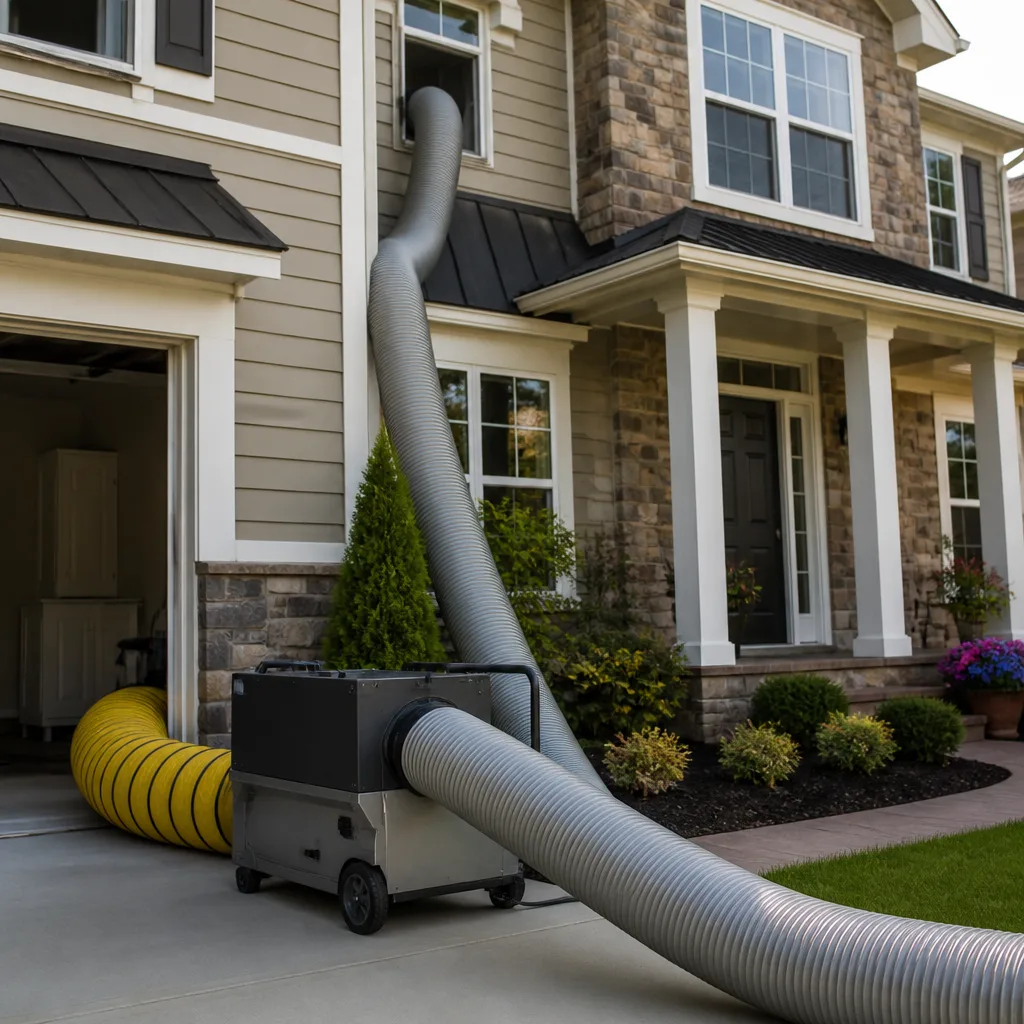 Whole-home duct cleaning
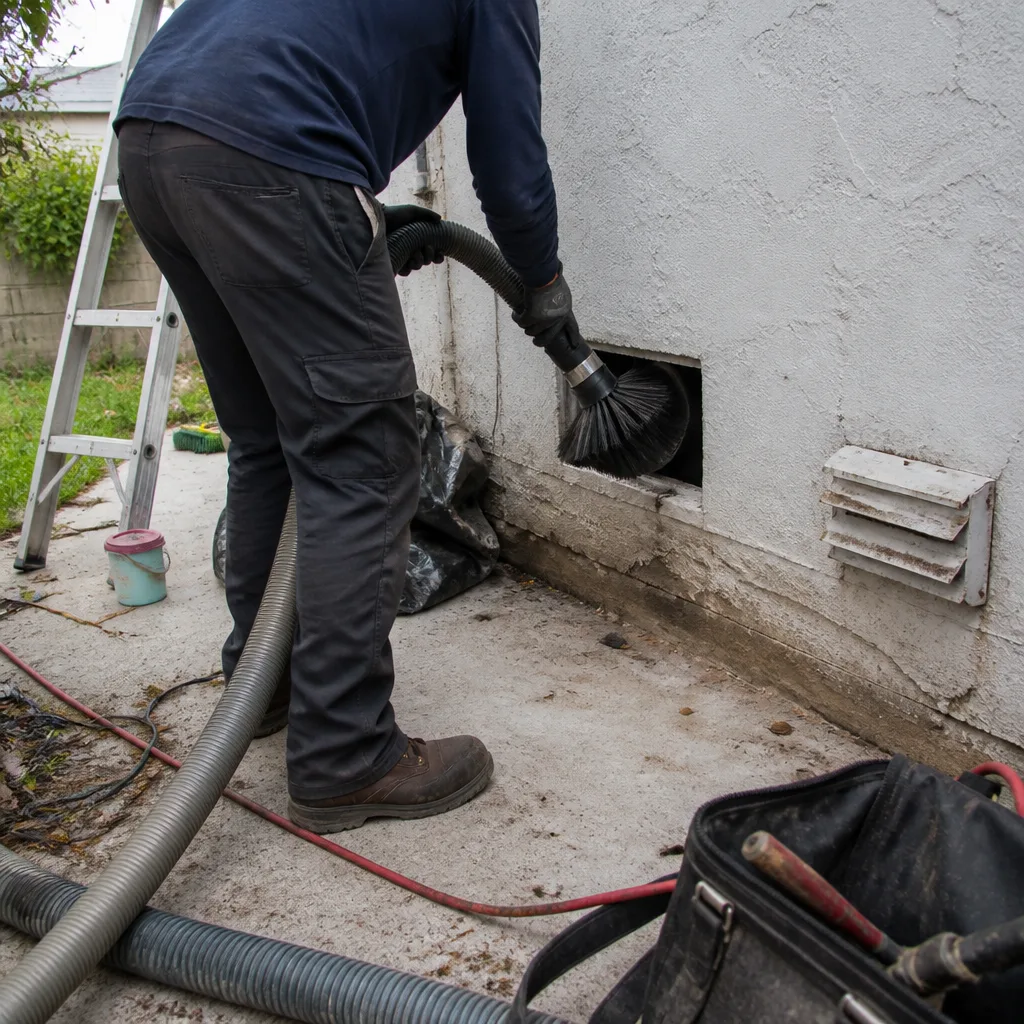
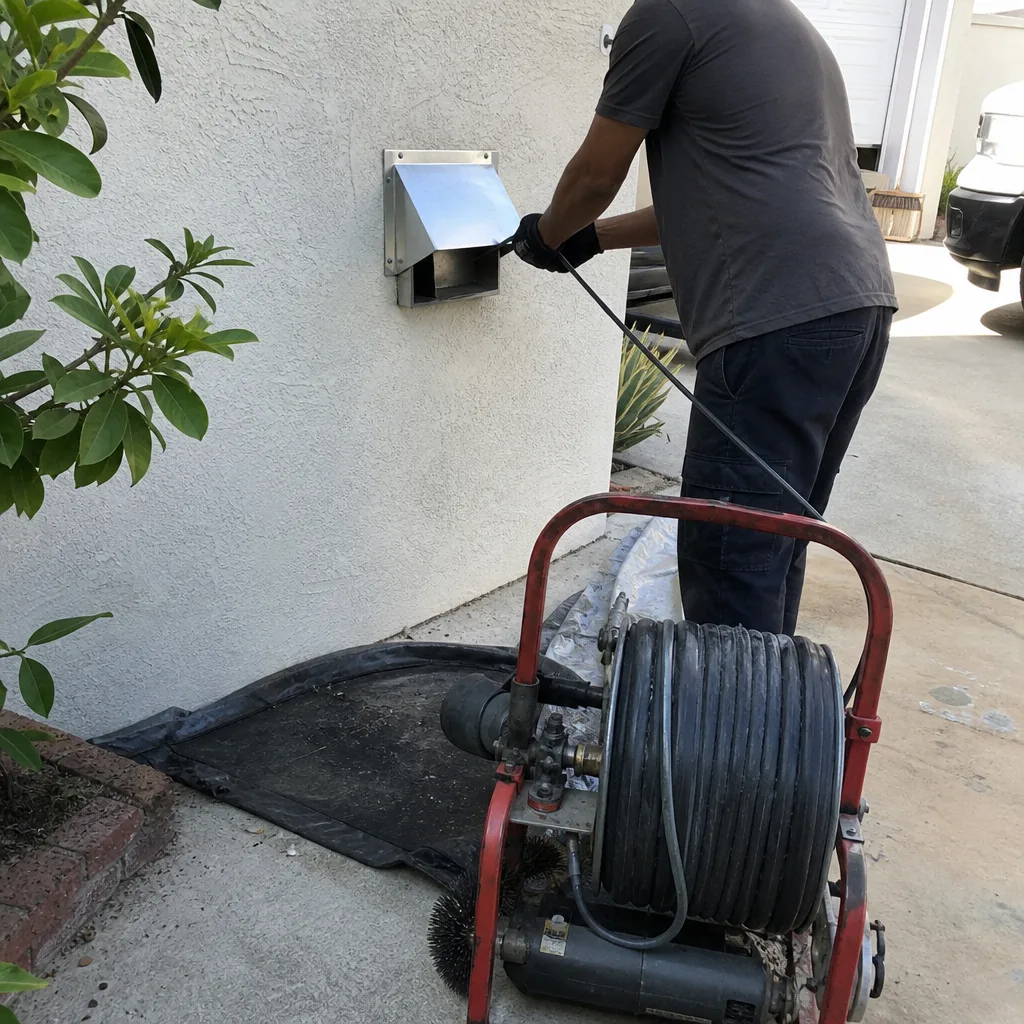
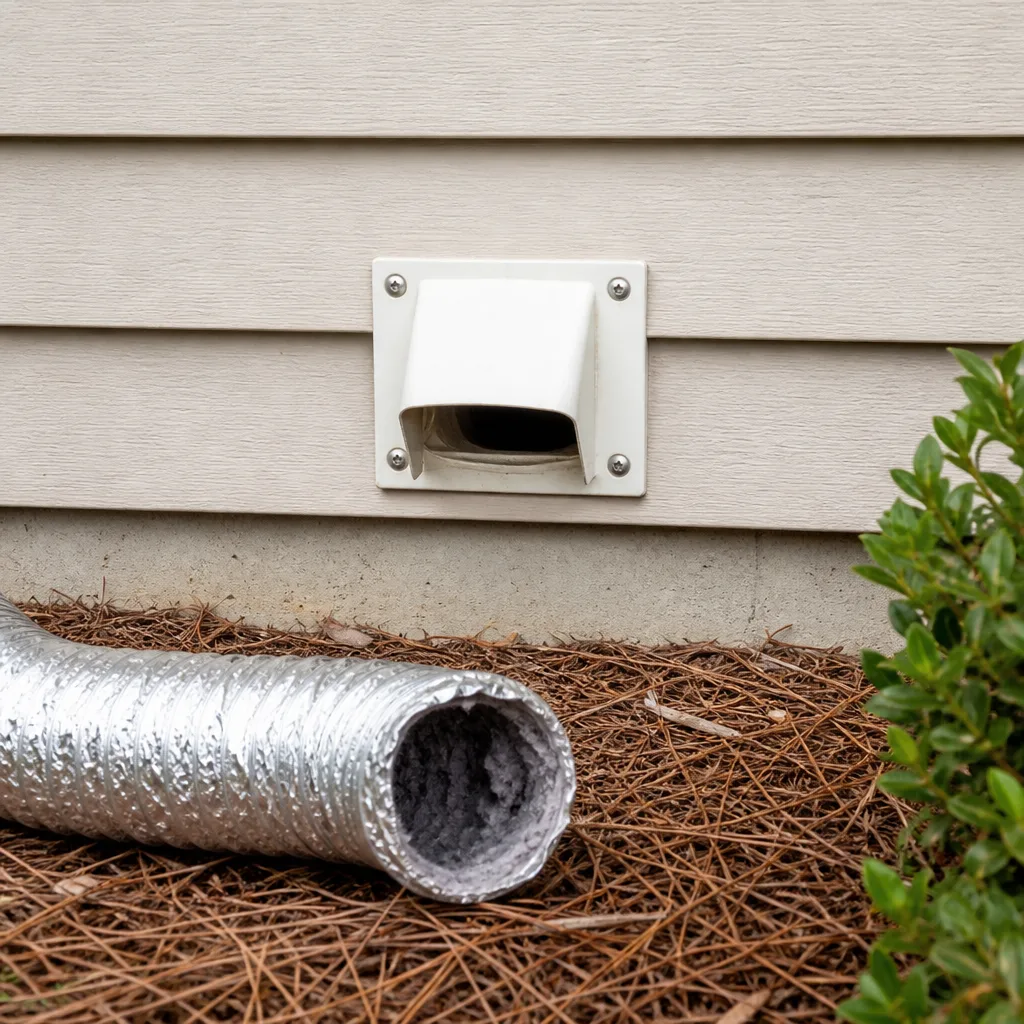 Dryer vent cleaning
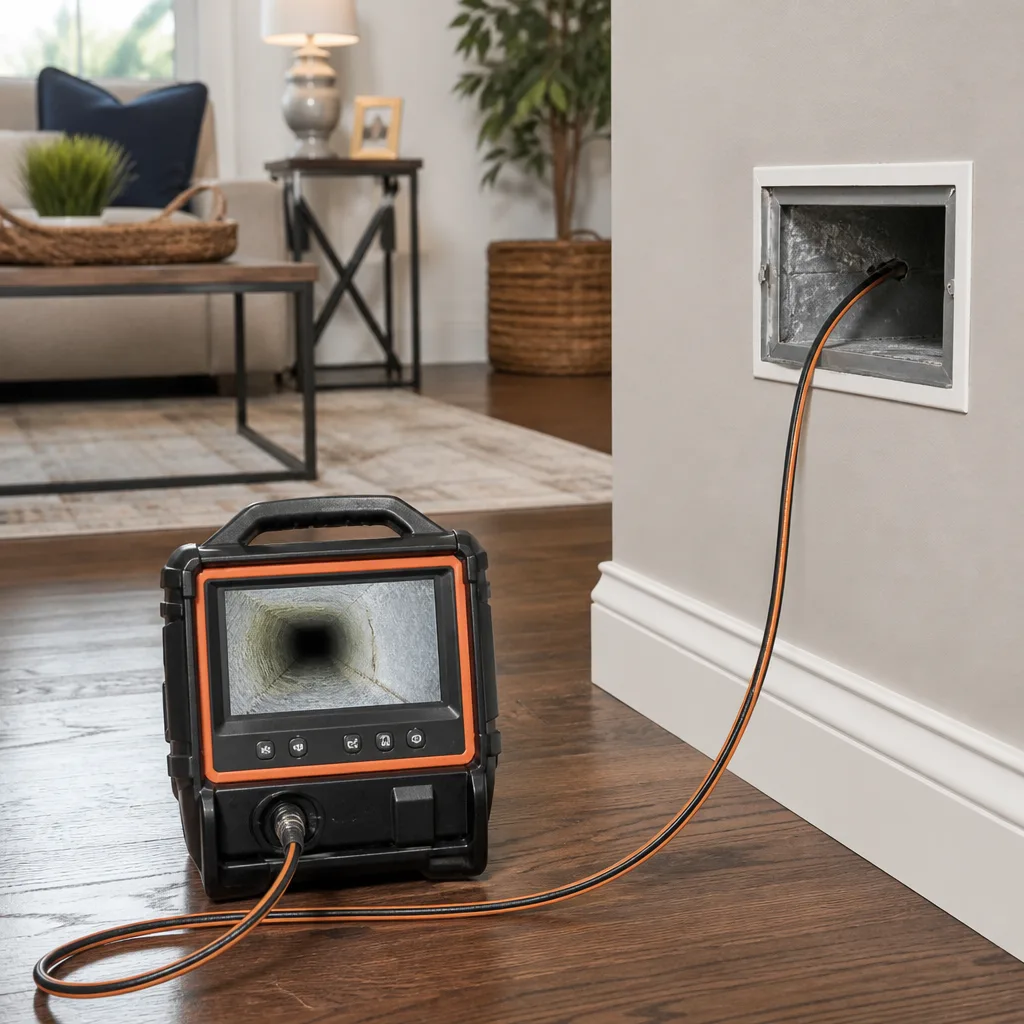 Camera inspection
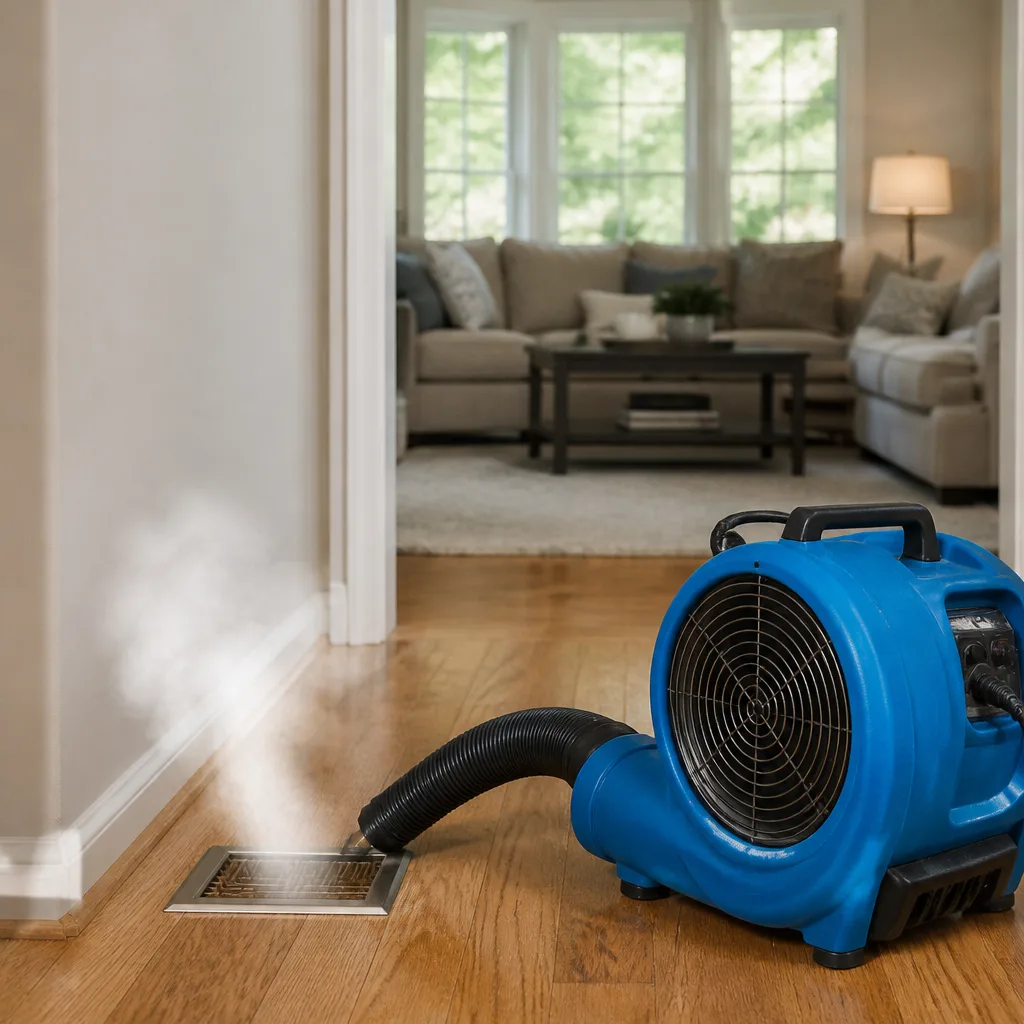 Sanitizing & deodorizing
Whole-system duct and dryer vent check with before-and-after photos - you see exactly what came out of your vents
That "$99 whole-house special" is a bait ad - the real number appears once they are in your hallway, or the "clean" is a shop-vac at the register. We photograph the inside of your ducts before and after instead.
Seasonal Air Duct Cleaning Care for West Covina: Year-Round Homeowner’s Guide
Santa Ana winds push Mojave Desert dust through the San Gabriel Valley at 40+ mph every fall, and that particulate surge goes straight into return-air grilles while HVAC systems run. Most West Covina homeowners clean their ducts in spring because that’s what national guides suggest. Those guides were not written for a city wedged between the desert and the LA Basin. This guide replaces the generic “clean twice a year” advice with a West Covina-specific maintenance calendar tied to actual local air quality events, so you clean at the right time, not the convenient time.
Styles & brands we work with
Quick Answer
The best time for our Air Duct Cleaning services in West Covina is October through November, after the first major Santa Ana wind event and before heating season forces accumulated dust through your registers daily. A standard whole-system duct cleaning for a typical West Covina home runs $350 – $650 depending on duct count and contamination level. Spring requires a different task entirely: filter replacement, drain-pan maintenance, and coil inspection to handle the condensation-driven mold risk that arrives with cooling season.
Table of Contents
- West Covina’s Real Air Quality Calendar
- Why Fall Is the Highest-Priority Cleaning Window
- Spring Maintenance: Filters, Drain Pans, and the Mold-on-Coil Problem
- Summer Preparation Checklist: Airflow Before Peak Cooling Demand
- How Santa Ana Winds Actually Contaminate Your Ducts
- How to Build a Two-Year Duct Maintenance Log
- Understanding Duct Cleaning Methods: What Actually Gets Debris Out
- Common Mistakes to Avoid
- When to Call a Professional
- Frequently Asked Questions
- The Bottom Line
West Covina’s Real Air Quality Calendar
West Covina does not have four textbook seasons. It has two air-quality events that drive duct contamination on a schedule most homeowners never track. The first is SCAQMD ozone season, which runs May through October. During these months, inland heat bakes vehicle emissions and industrial output into ground-level ozone that settles across the San Gabriel Valley. The second is Santa Ana wind season, which runs October through February. These downslope winds carry fine Mojave Desert particulate matter through the Cajon Pass and into the Inland Valley at sustained speeds that regularly exceed 40 mph.
Each event contaminates ducts differently. Ozone season pushes fine combustion particulates and smog residue into homes through open windows and ventilation gaps. Santa Ana season pushes coarse desert dust, pollen, and ash into return-air grilles while HVAC systems pull air through the filter. The result is layered contamination: fine particles that adhere to duct walls during summer, then coarse debris that piles on top during fall.
Understanding this calendar matters because cleaning at the wrong time wastes money. A duct cleaning in April removes winter debris, yes. But it does nothing about the Santa Ana surge that arrives six months later. By October, the ducts are dirty again, and you’ve paid for two cleanings when one well-timed one would have done the job.
What This Means for Cleaning Timing
- May – October (ozone season): Focus on filtration. Run a MERV 8 – 11 filter and replace it every 60 – 90 days. Fine particles collect on filters first.
- October – February (Santa Ana season): The highest-contamination window. Dust enters through every gap. This is when ducts get visibly dirty.
- March – April (transition): Address condensation risks. Moisture from A/C startup creates the conditions for mold on coils and in drain pans.
- November – December (post-Santa Ana): The ideal cleaning window for most West Covina homes. Dust surge has peaked, heating season is ramping up.
In our experience cleaning ducts across West Covina, the homes with the heaviest contamination are almost always cleaned in spring and skipped in fall. The schedule is backwards, and the ducts tell that story.
Why Fall Is the Highest-Priority Cleaning Window
Fall cleaning in West Covina, specifically October through November, is the highest-priority window because it sits at the intersection of two forces: the tail end of peak Santa Ana particulate events and the start of heating season. Once the furnace kicks on, it pushes air through ductwork daily. Whatever sits in those ducts gets aerosolized and circulated through the living space repeatedly for months.
Here is the sequence every West Covina homeowner should understand:
- September – October: Santa Ana winds peak. Desert dust enters return-air grilles. Some gets caught by the filter. Much of it bypasses the filter through gaps, settle in ducts, or clings to register interiors.
- November: Evening temperatures drop enough to trigger heating demand. The furnace activates and begins cycling that dust through the home.
- December – February: Heating runs near-daily. Contaminants recirculate on every cycle. Occupants breathe the same particulate load repeatedly.
Cleaning before step two is the entire strategy. A duct cleaning in late October or November removes the Santa Ana deposit before heating season starts, which means the air you breathe from December through February starts cleaner and stays cleaner.
What a Fall Duct Cleaning Should Include
Professional Air Duct Cleaning in West Covina should cover far more than vacuuming registers. A complete job includes:
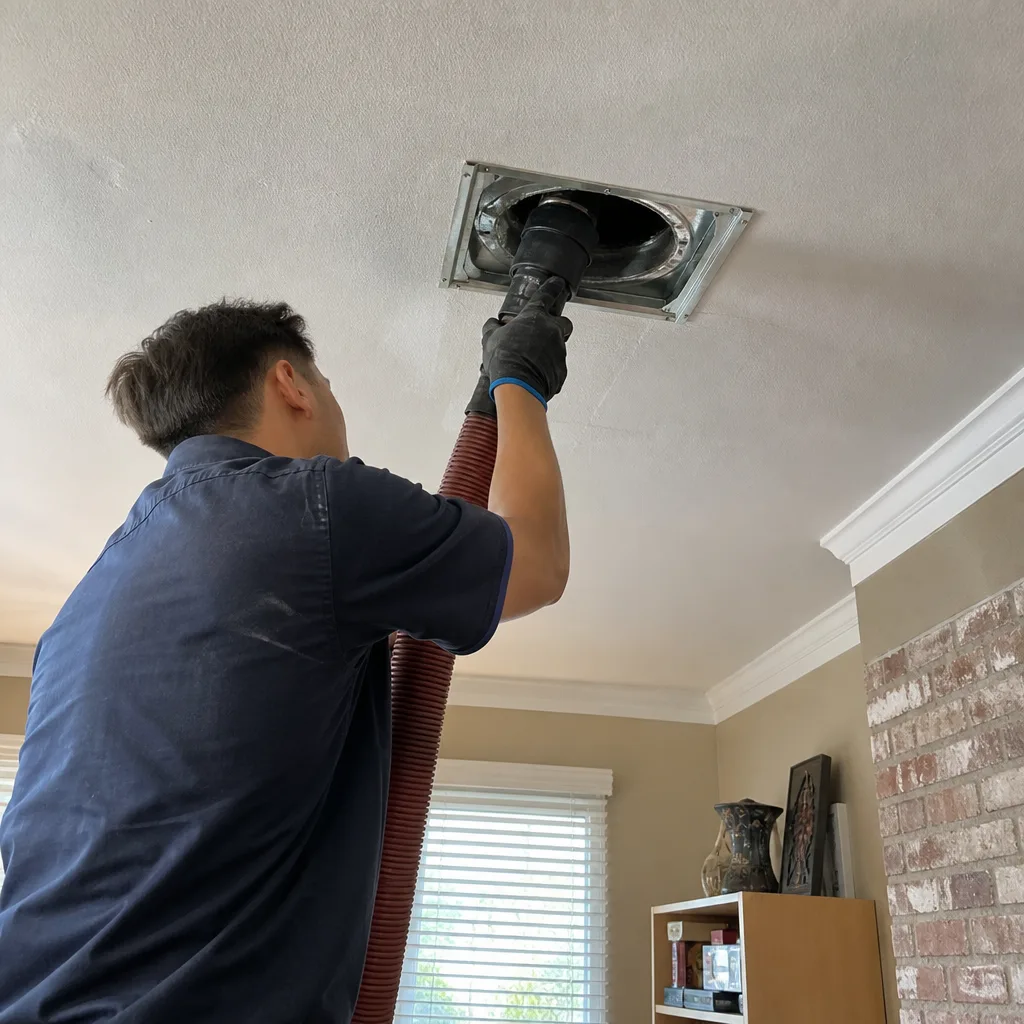
- Supply and return duct cleaning with a rotary brush system
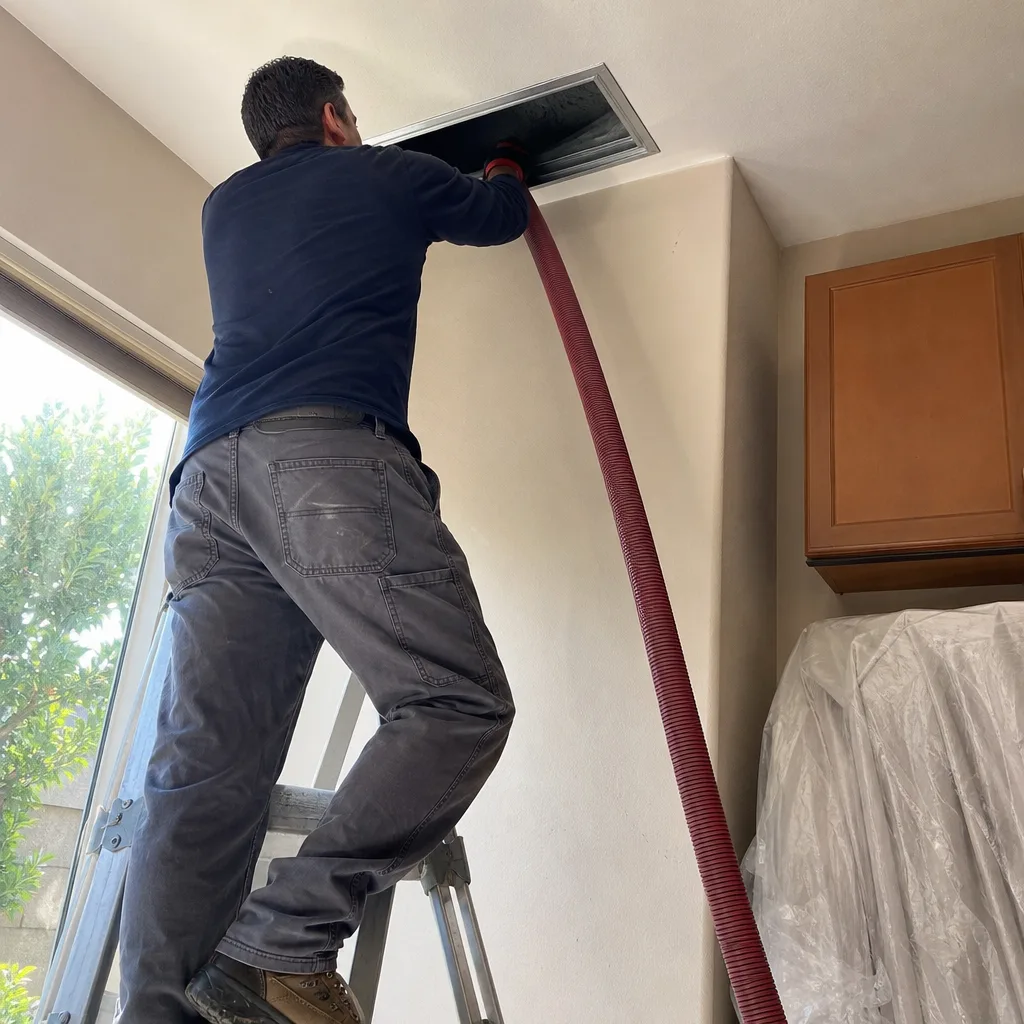
- Negative-pressure extraction, which means loosened debris goes straight into the vacuum, not back into your living room
- Cleaning of the interior air handler surfaces, blower motor housing, and evaporator coil access area
- Register and grille cleaning, including removal of built-up dust on vent covers
- Post-cleaning inspection with photographic documentation
Most standard air duct cleanings for a typical West Covina home run $350 – $650. Larger homes with multiple systems or significant contamination can reach $800 – $1,200. Any quote well below that range should raise questions about what is actually being cleaned and with what equipment.
Spring Maintenance: Filters, Drain Pans, and the Mold-on-Coil Problem
Spring in West Covina is less about cleaning ducts and more about addressing moisture. When the system transitions from heating to cooling, condensation begins forming on the evaporator coil and draining into the drain pan. That standing moisture, combined with dust already on the coil, creates what we call the mold-on-coil problem. This is a biological growth issue that duct cleaning alone cannot fix.
Here is the mechanism: during winter, the evaporator coil sits mostly dry. Dust and debris from Santa Ana season settle on its fins. When A/C starts in late spring, the coil drops below dew point and moisture condenses on those dusty surfaces. The result is a damp, nutrient-rich film. Within weeks, microbial growth appears. That growth releases spores into the airstream every time the blower runs.
Spring Maintenance Steps
- Replace the filter first. A MERV 8 filter from Honeywell or a similar brand is the right baseline for most West Covina homes. Upgrade to MERV 11 if anyone in the home has allergies or asthma. Change it every 60 – 90 days, or more frequently during Santa Ana season.
- Inspect and clean the drain pan. Standing water in the pan signals a clogged condensate line. Clear the line with compressed air or a wet-dry vac. Straight white vinegar poured down the line monthly prevents algae buildup.
- Check the coil visually. If the coil appears dark, fuzzy, or discolored, biological growth is likely present. This requires professional attention, including coil cleaning and possibly UV treatment like Aprilaire’s UV germicidal systems. Filter replacement alone will not solve it.
- Run the A/C for 30 minutes. Confirm airflow from every register feels consistent. Weak airflow from some registers and strong airflow from others often signals a duct obstruction or leak.
We regularly see spring maintenance skipped because the system “works fine.” A system running with a mold-coated coil still produces cold air. It also circulates spores through the home every time it runs. Performance and air quality are separate concerns, and the second one does not announce itself.
Summer Preparation Checklist: Airflow Before Peak Cooling Demand
Summer in West Covina is not the time to discover your return-air system is undersized or obstructed. July and August push cooling demand to the seasonal peak, and any airflow restriction forces the system to run longer, work harder, and pull more debris through gaps in the return path.
Here is the pre-summer checklist we recommend for every West Covina homeowner:
- Return-air airflow check. Place a tissue against each return grille while the system runs. It should hold firmly against the grille. A weak hold signals obstructed return ducting, often from debris accumulation or collapsed flex duct.
- Filter evaluation. If you upgraded to MERV 11 or higher during Santa Ana season, assess whether the system can handle the pressure drop. Some older blowers struggle with high-MERV filters, reducing airflow. When in doubt, drop to MERV 8 for summer.
- Debris check at the air handler. Open the access panel (power off first) and inspect the blower housing and coil area. Visible dust accumulation on blower fins is a strong signal that professional HVAC Cleaning in West Covina is overdue.
- Decide: cleaning or filter upgrade? If dust accumulation is light and airflow is strong, a fresh filter may be all you need. If the blower is dust-caked or airflow is weak, a Rotobrush cleaning is the right call. The difference matters because cleaning when a filter swap would suffice wastes money. But skipping cleaning when airflow is genuinely obstructed shortens system life.
Rotobrush Cleaning vs. Simple Filter Upgrade
- Simple filter upgrade: Appropriate when airflow is strong, registers look clean, and the home was professionally cleaned within the last 12 months.
- Rotobrush cleaning: Appropriate when blower fins are dust-caked, registers show visible debris, occupants report worsening allergy symptoms indoors, or the system has not been cleaned in 2+ years while running through multiple Santa Ana seasons.
The air handler is the least-visible and most-ignored component in the system. It is also the one that recirculates whatever sits inside it. A pre-summer check takes 20 minutes and tells you exactly which path to take.
How Santa Ana Winds Actually Contaminate Your Ducts
Santa Ana winds are not just an outdoor phenomenon. They are the single biggest driver of duct contamination in West Covina, and most homeowners never connect the two. Here is the actual mechanism:
- Winds push desert particulate into the urban environment. Fine dust from the Mojave, plus pollen and ash from wildfire events, blankets the San Gabriel Valley. Winds at 40+ mph force this material into every exterior gap and crack.
- HVAC systems pull outdoor air through return grilles and leakage points. Return ducts under negative pressure draw air from unconditioned spaces like attics and garages. During Santa Ana events, that air carries a heavy particulate load.
- Filters catch some, but not all. A standard MERV 8 filter captures particles 3 – 10 microns in size. Fine desert dust runs 0.1 – 5 microns. A meaningful portion passes through.
- Duct interiors accumulate layers. Whatever bypasses the filter settles in duct runs, especially at elbows, transitions, and low points. Each Santa Ana event adds another layer.
- Heating season redistributes the load. Once the furnace runs, airflow picks up settled debris. The first few heating cycles after a dusty fall are typically the worst, which is exactly when West Covina homeowners notice dust on furniture and sneezing indoors.
The pattern repeats yearly. Homes that never get duct cleaning accumulate years of desert particulate, which is why some West Covina homes develop visible dust accumulation within 24 hours of cleaning surfaces. The dust is not coming from outside. It is being delivered through the registers.
How to Build a Two-Year Duct Maintenance Log
A maintenance log gives you data, not guesses, when deciding whether to clean. Most homeowners clean ducts based on vague timelines (“it’s been a while”) or fear-based upsells. A simple log eliminates both.
Here is how to build one in under 10 minutes:
- Create a note on your phone or a simple spreadsheet. Columns: date, filter change, MERV rating, air quality observations, cleaning performed, cost.
- Log every filter change. Note the date you installed a new filter and its MERV rating. A filter that darkens within 30 days during Santa Ana season tells you the particulate load entering your home is high.
- Log air quality observations monthly. Check a public AQI source for West Covina. Note any month where AQI exceeded 100 for 3+ days. Those are high-contamination periods.
- Log register dust accumulation. Once monthly, wipe a white cloth across the interior of a return grille. Note visible debris. A dramatic increase in fall tells you Santa Ana season is loading your ducts.
- Log any cleaning service. Date, provider, scope of work, before-and-after photos if available.
- Review every 6 months. Ask: Is filter life shortening? Is register dust increasing? Is the AQI in my neighborhood trending upward? If two of three are yes, cleaning is justified.
After two years, this log reveals exactly how quickly your specific home accumulates contamination. That is far more useful than any national “every 3 – 5 years” guideline, because it reflects the actual conditions of your West Covina property: your return path leakage, your filter efficiency, your proximity to open space or freeway particulate sources.
We have handed this exact log format to homeowners in West Covina for years. The ones who use it end up cleaning at the right interval for their actual conditions. The ones who do not clean either too often or not often enough.
Understanding Duct Cleaning Methods: What Actually Gets Debris Out
Not all duct cleaning is equal. Some methods remove years of settled debris. Others move visible dirt around and call it a day. Understanding the difference protects you from paying for a service that does nothing.
The Two Main Approaches
Negative-pressure extraction with rotary brushing is the professional standard. A powerful vacuum unit, such as a Nikro HEPA-rated system, is connected to the duct system to create continuous suction. While vacuum holds the system under negative pressure, a rotary brush, typically a Rotobrush system, agitates the interior duct surfaces to break loose adhered debris. That debris is pulled directly into the vacuum. It never enters the living space.
Brush-only cleaning agitates debris without meaningful extraction. This knocks dust loose but leaves it in the system, where it simply re-settles or blows into the home on the next cycle. Some crews use shop vacs connected at registers, which generates nowhere near the airflow needed for proper extraction. The result is a cleaning that appears to happen but actually does not.
What Professional-Grade Equipment Looks Like
- Rotobrush rotary brush systems: Agitate interior duct surfaces, including through elbows and transitions, to break loose adhered particulate.
- Nikro HEPA-rated vacuum extraction: Creates the negative-pressure airflow that captures loosened debris at 99.97% efficiency down to 0.3 microns, meaning it traps fine desert dust instead of exhausting it outside or recirculating it indoors.
- Abatement Technologies containment units: Seal off work areas when heavy contamination or mold remediation is required, preventing cross-contamination during the cleaning process.
When you book a cleaning, ask what equipment the technician will bring. If the answer is vague or limited to “a vacuum,” the job will be the visual equivalent of moving dust from one end of the duct to the other. Professional-grade equipment matters because desert particulate is extremely fine. It requires proper filtration to remove, not just agitation.
Common Mistakes to Avoid
- Cleaning in spring instead of fall. Spring cleaning removes winter debris right before the Santa Ana winds of fall deposit a fresh layer. By heating season, the ducts are dirty again and you have paid twice.
- Assuming a high-MERV filter eliminates the need for duct cleaning. A MERV 11 or 13 filter catches more particles, but the 0.1 – 5 micron desert dust of Santa Ana season still passes through. Filtration reduces accumulation; it does not eliminate it.
- Skipping the drain-pan check when switching from heat to A/C. Condensation starts the moment the coil gets cold. If the drain line is clogged from winter inactivity, water backs up into the pan and creates a mold reservoir. This is one of the most common issues we see in West Covina homes each May and June.
- Hiring based on lowest price. A $99 whole-house duct cleaning in West Covina is not cleaning the ducts to any meaningful standard. It is typically a register vacuum with a bait price. Real cleaning involves negative-pressure extraction and rotary agitation, which costs more because it takes more time and equipment.
- Ignoring the return-air path. Supply ducts get all the attention, but return ducts pull air through unconditioned spaces like attics. Leaks in return ducting pull dusty attic air directly into the system, bypassing the filter entirely. A return-air leak in a West Covina attic is a direct conduit for desert dust.
- Duct cleaning during Santa Ana season instead of after. Cleaning in October while winds are still active means the system gets re-contaminated within weeks. The right moment is after the peak event, typically late October through November.
- Not asking for before-and-after photos. A professional job includes photographic documentation of what was removed. If photos are not available, you have no way to verify the work was actually done. At Cardinal Air Duct West Covina home, before-and-after photo documentation is standard on every job. It is part of The Relay Standard, which also includes a live trackable arrival time and a digital invoice payable by link.
When to Call a Professional
Some duct conditions justify a professional evaluation immediately. Call for an inspection if you see visible dust accumulating on registers within days of cleaning, if family members experience worsened allergy or asthma symptoms primarily indoors, if airflow from some registers is noticeably weaker than others, if you smell a musty odor when the system cycles on, or if your home has never been cleaned after 2+ years of Santa Ana seasons. Each of these signals points to something deeper than a filter can address.
Cardinal Air Duct West Covina offers free estimates in West Covina. Call (424) 688-1845 and a live person answers, 24/7. You will get a written price before any work starts, and it does not change at the door.
Frequently Asked Questions
Most standard air duct cleanings in West Covina run $350 – $650 for a typical single-system home. Larger homes, multiple HVAC systems, or heavy contamination can push the total to $800 – $1,200. Quotes below $200 typically indicate a register-only vacuum service that does not clean the full duct system. Call (424) 688-1845 for an exact quote, written before any work starts.
Most West Covina homes benefit from professional duct cleaning every 2 – 3 years, but the real answer depends on your home’s specific exposure to Santa Ana particulate and your filter habits. Homes near open space or with older, leak-prone return ducting accumulate contamination faster. A two-year maintenance log tells you exactly when your home needs it, based on data rather than a generic schedule.
Low-priced duct cleaning quotes typically cover a register vacuum only, not a full-system cleaning with negative-pressure extraction. A proper cleaning involves rotary brush agitation and HEPA-rated vacuum extraction, which requires professional equipment and 3 – 6 hours of labor. When you see a price too good to be true, ask what equipment is used, how long the job takes, and whether before-and-after photos are included.
Professional duct cleaning includes before-and-after photo documentation of the duct interior, the air handler, and the registers. If a company cannot provide photos, you have no way to verify the work. Under The Relay Standard, every Cardinal Air Duct West Covina job includes before-and-after photo proof as a standard deliverable, not an upsell.
A shop vac lacks the airflow and reach to clean duct interiors effectively and can actually damage flex duct. Do not attempt DIY duct cleaning. The proper method uses negative-pressure extraction with a HEPA-rated vacuum system and rotary brush agitation. This requires professional equipment and training. The same caution applies to dryer vents. Dryer Vent Cleaning in West Covina should be scheduled annually, especially in homes with longer vent runs serving gas dryers, which carry additional safety risk if lint accumulation restricts airflow.
Yes, for homes with meaningful dust accumulation in the duct system. Cleaning removes the particulate reservoir that recirculates during Santa Ana events and heating season. However, duct cleaning is not a substitute for proper filtration. Pair professional cleaning with a MERV 8 – 11 filter replacement every 60 – 90 days during peak contamination months, and you will see the largest reduction in indoor allergen load.
The Bottom Line
West Covina’s seasonal duct care calendar is backwards from what national guides suggest. Clean in fall, after Santa Ana season peaks and before heating season circulates dust daily. Maintain in spring, addressing the condensation-driven mold risk that arrives with cooling season. Prepare in summer, verifying airflow before peak demand stresses the system. Track everything in a simple log, and you will never guess about cleaning again. For more guides & resources on maintaining your HVAC system, explore our blog. The right schedule, based on the actual air-quality calendar of the San Gabriel Valley, keeps your air cleaner, your system running longer, and your money spent at the moment it actually matters most.
Written by Omar Haddad, Owner at Cardinal Air Duct West Covina, serving West Covina since 2005.
See the difference
 Before
 After
After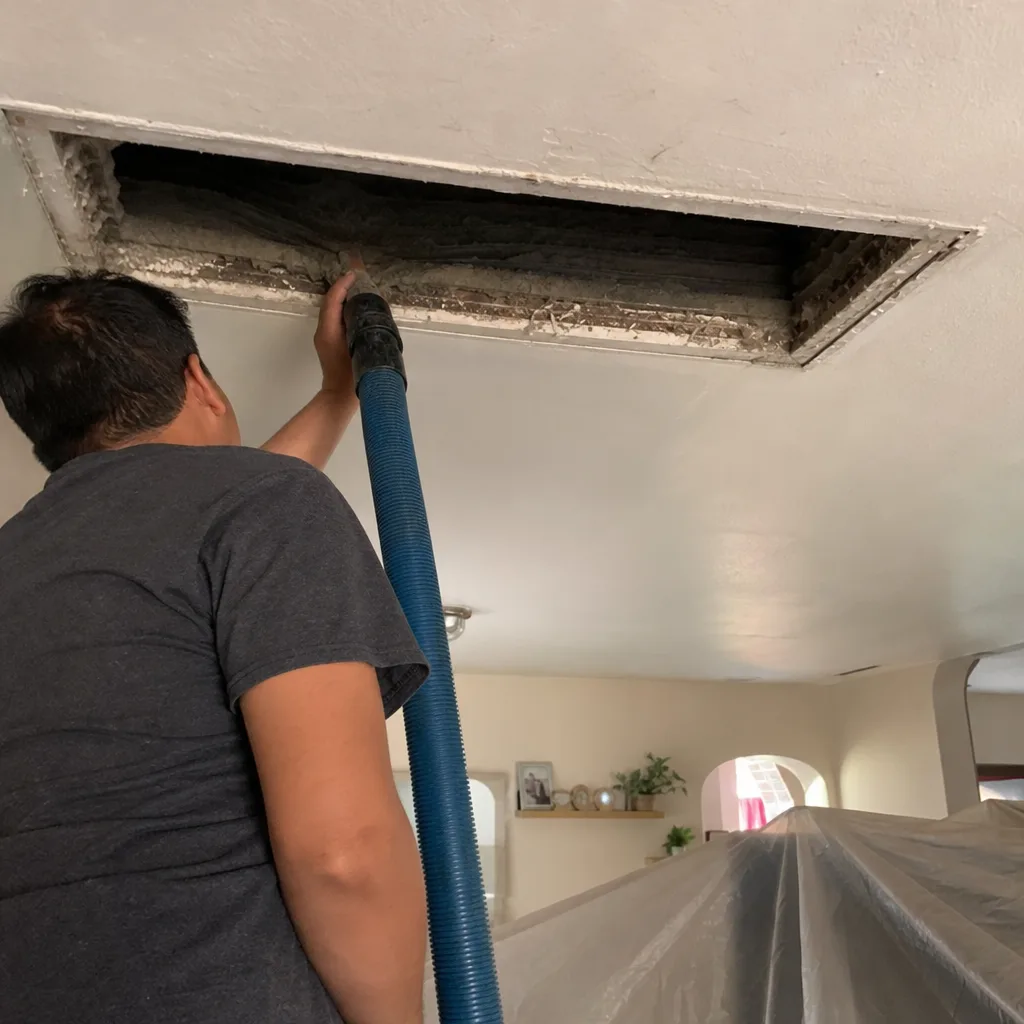 Before
 After
After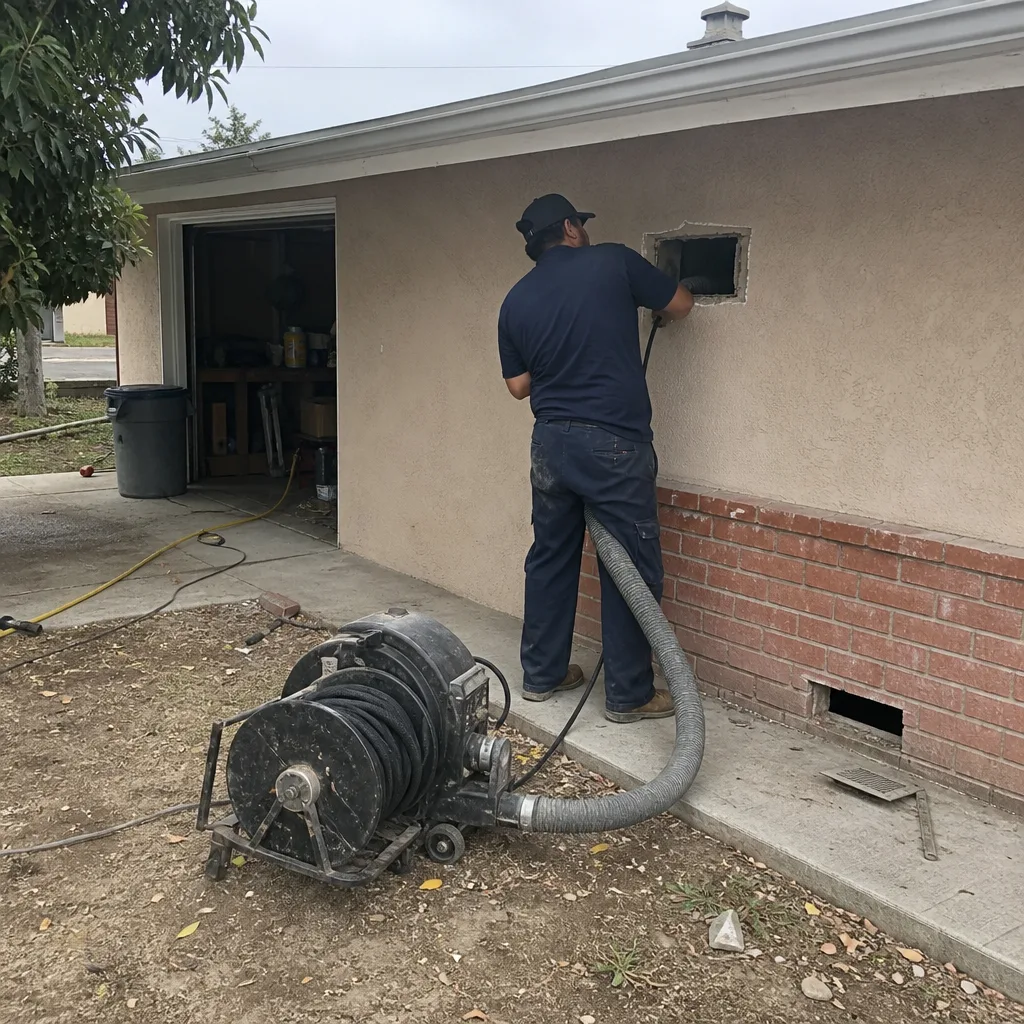 Before
 After
After