
Last updated October 15, 2026
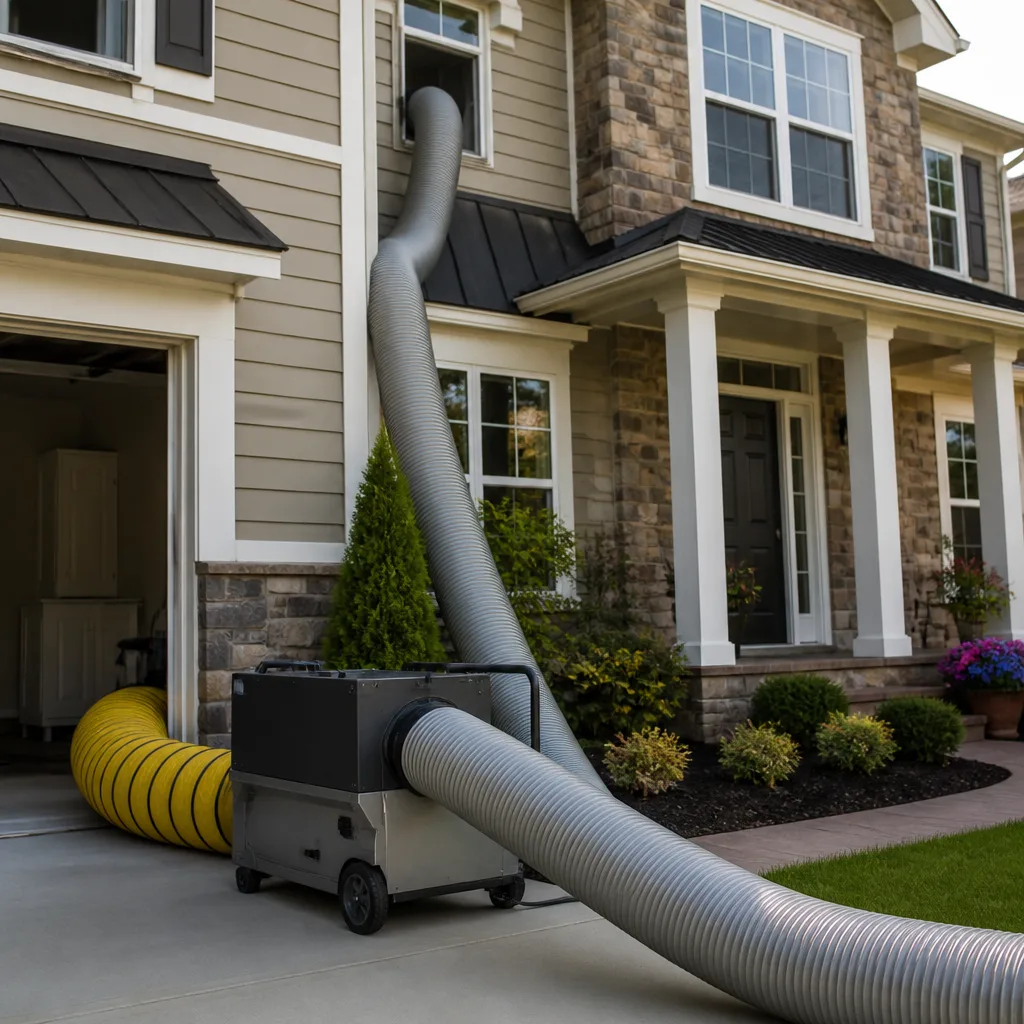 Whole-home duct cleaning
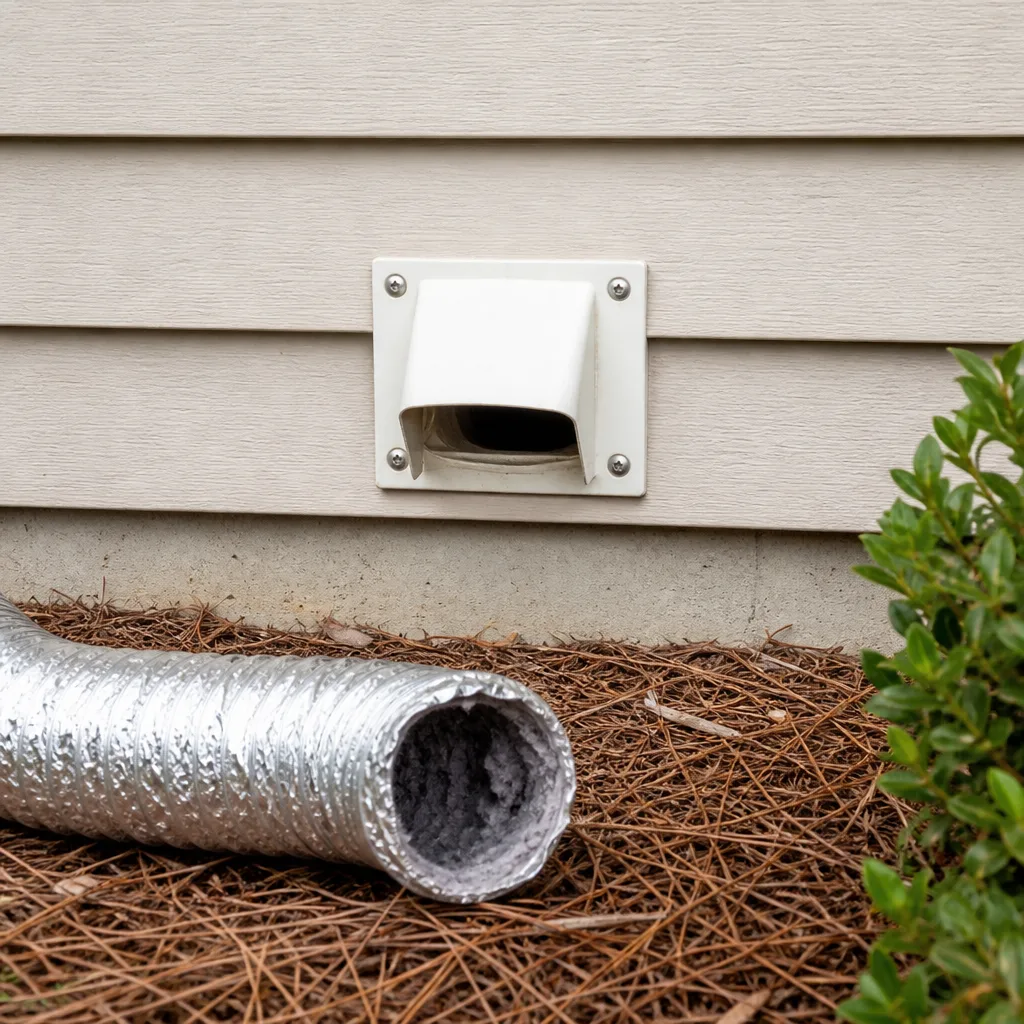 Dryer vent cleaning
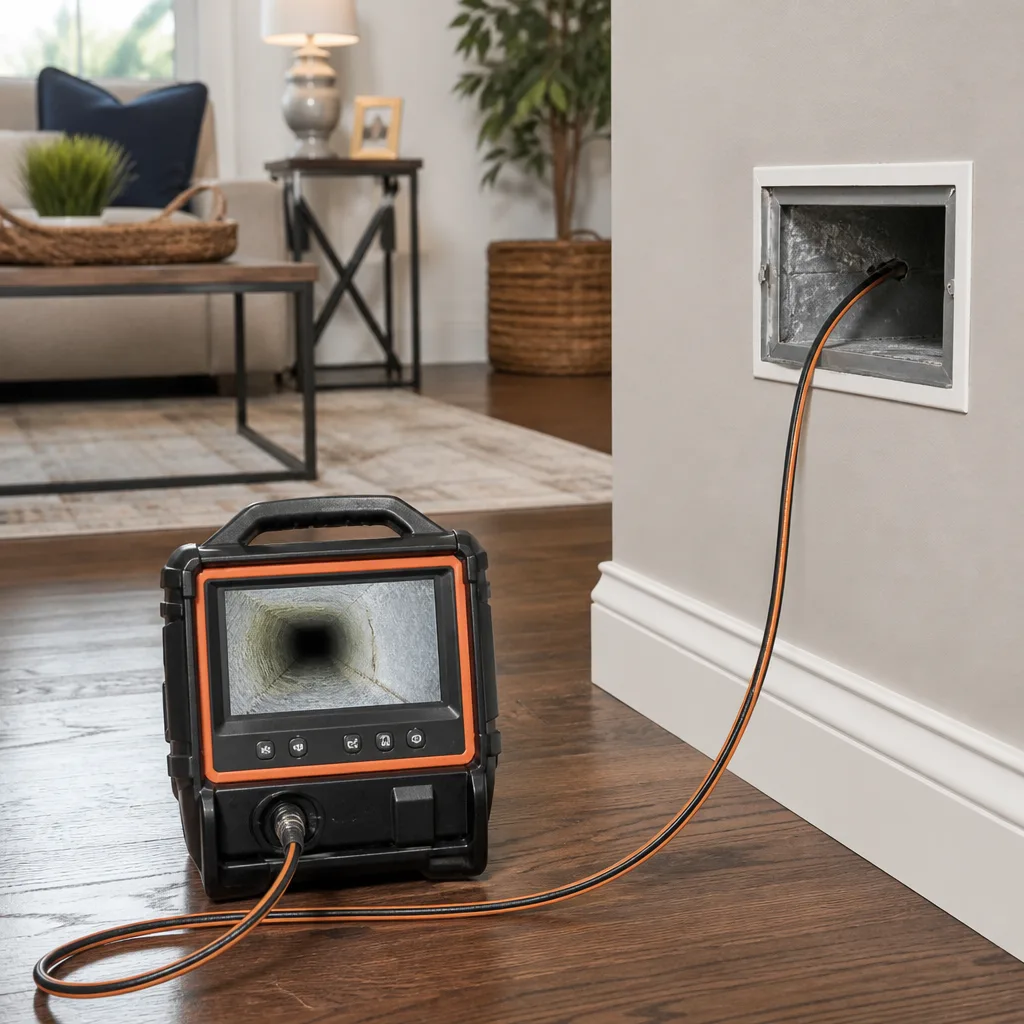 Camera inspection
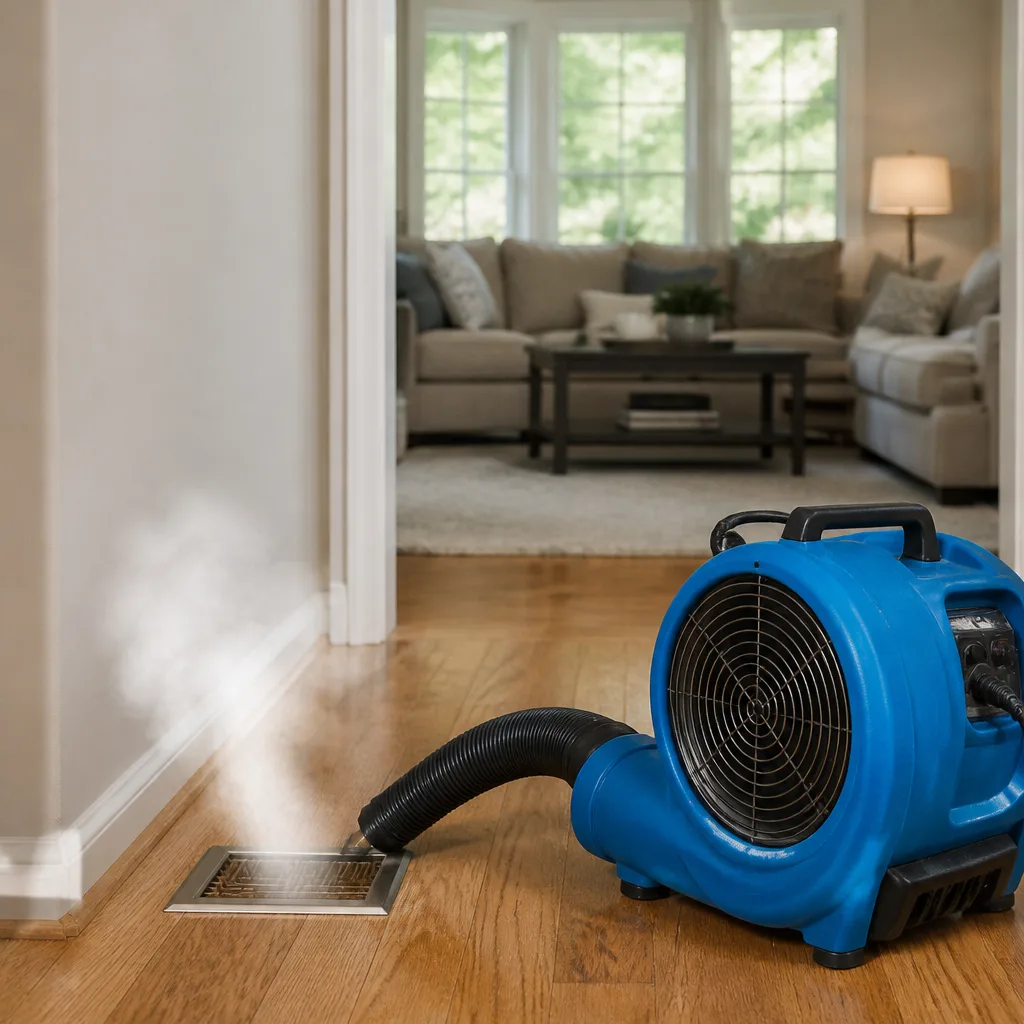 Sanitizing & deodorizing
Whole-system duct and dryer vent check with before-and-after photos - you see exactly what came out of your vents
That "$99 whole-house special" is a bait ad - the real number appears once they are in your hallway, or the "clean" is a shop-vac at the register. We photograph the inside of your ducts before and after instead.
Air Duct Cleaning Permits, Codes & Inspections in CA: What You Need to Know
Here’s a counterintuitive fact that surprises most West Covina homeowners: the most expensive mistake in air duct cleaning isn’t a bad cleaning job. It’s a “helpful” technician who spots a damaged duct, grabs a roll of tape and a crimper, and “fixes” it right there without a permit. That fix may hold air for a year or two. It will also sit in your home’s mechanical history, undisclosed, and resurface later during escrow, an insurance claim, or a wall inspection. This guide draws the precise legal line between cleaning (no permit needed) and mechanical work (permit required under California Mechanical Code), and gives you the exact process for staying on the right side of it. For more context, see our Complete Guide to Air Duct Cleaning in West Covina.
Quick Answer
Routine air duct cleaning does not require a permit anywhere in California, including West Covina. The moment a technician modifies, replaces, re-seals, or re-routes ductwork with tools and materials, that becomes “alteration” work under the 2022 California Mechanical Code, which triggers a mechanical permit from the West Covina Building & Safety Department and requires a C-20 Warm-Air Heating, Ventilating and Air-Conditioning Contractor license from the CSLB. Cleaning companies without a C-20 cannot legally perform those repairs themselves, and you should never let them improvise one on the spot.
Styles & brands we work with
Table of Contents
- The Exact Line: Cleaning vs. Alteration Under California Mechanical Code
- West Covina Building & Safety: Permit Thresholds and the Inspection Process
- The C-20 License: Why Your Duct Cleaner Legally Cannot Modify Ductwork
- How to Verify a Contractor’s CSLB C-20 License in 60 Seconds
- What to Do When Your Duct Cleaner Finds Damaged Ducts
- Permits, Escrow, and Insurance: Why Unpermitted Duct Work Haunts You Later
- The Owner-Builder Exemption: What It Actually Covers (and What It Doesn’t)
- Permit Costs and Inspection Timelines for Duct Work in West Covina
The Exact Line: Cleaning vs. Alteration Under California Mechanical Code
The 2022 California Mechanical Code (CMC) governs every mechanical system in a California building, and it uses two words that decide whether you need a permit: “maintenance” and “alteration.” Cleaning falls squarely under maintenance. Alteration is anything that changes the physical configuration, material, or capacity of the duct system.
Here is the line in plain terms. These actions are cleaning and require no permit:
- Rotary brush agitation that loosens debris inside the duct interior
- Negative-pressure extraction, where a HEPA-rated vacuum pulls loosened debris out of the duct and into containment
- Air washing of interior duct surfaces
- Access panel installation for cleaning access, provided the panel is re-sealed without altering duct dimensions
- Sanitizing or deodorizing with EPA-registered products applied through the duct interior
These actions are alterations and trigger a permit in West Covina:
- Replacing a section of flex duct, rigid duct, or plenum
- Re-sealing joints with mastic or foil tape after disconnecting duct sections
- Cutting into the duct to add a new register, return, or branch line
- Modifying duct size, shape, or path
- Replacing dampers, balancing devices, or any in-line mechanical component
Here is a real example we’ve seen on job sites in West Covina and across the San Gabriel Valley. A crew is cleaning the return side of a system in a 1980s-era home in the South Hills neighborhood. The technician reaches a section of flex duct that has sagged and torn at a panned joist connection. He says, “I can patch that for you right now, no extra charge.” What he is offering is an unpermitted alteration. If he cuts the duct, applies mastic, and re-hangs it, he has modified the mechanical system without a permit. That work will never appear in the city’s records. It will not be inspected. And if that patch fails and dumps conditioned air into the attic for years, no one is accountable.
West Covina Building & Safety: Permit Thresholds and the Inspection Process
West Covina Building & Safety Department follows the 2022 California Mechanical Code and the 2022 California Building Code. The city issues a Mechanical Permit for duct alteration, replacement, and any repair that changes system configuration. The city does not issue a permit for access, cleaning, or inspection-only work.
So what does a mechanical permit actually look like for duct work in West Covina? Here’s the typical sequence:
- Permit application. The licensed C-20 contractor or owner-builder submits a permit application describing the scope: which ducts are being replaced, what materials will be used, and where the work occurs.
- Plan review (when required). If the alteration changes system capacity or adds new branch lines, the city may require a simple line drawing of the duct layout. A like-for-like replacement of a damaged flex duct section usually skips plan review and goes straight to permit issuance.
- Permit issuance. Fees are paid, the permit is issued, and work can begin.
- Rough inspection. The inspector checks duct connections, support, sealing, and insulation before the work is closed up. This is the critical inspection for attic and crawlspace work.
- Final inspection. The inspector verifies that the completed system operates correctly and that all labels, straps, and access panels are in place.
For a homeowner, the rough inspection matters more than the final. If a contractor replaces a flex duct in your attic and no rough inspection happens, you’ll never know whether the inner liner was properly connected to the collar or whether the insulation was re-wrapped. Those failures hide behind drywall and attic flooring for years, leaking conditioned air into spaces you never see. In West Covina’s warm Mediterranean climate, where we run AC from May through October, an unsealed duct in a hot attic can waste 20 to 30 percent of the air your system produces, according to ENERGY STAR estimates for typical California homes.
The C-20 License: Why Your Duct Cleaner Legally Cannot Modify Ductwork
For years, we’ve watched homeowners treat duct cleaning and duct repair as the same service. They are not. Under California Contractors State License Board (CSLB) rules, duct cleaning falls under general building maintenance and can be performed by a properly registered business without a C-20 license. But the moment work moves from cleaning to repair, sealing, replacement, or modification, California Business and Professions Code Section 7026.1 requires a C-20 Warm-Air Heating, Ventilating and Air-Conditioning Contractor license.
A C-20 is not a piece of paper your uncle picks up at a seminar. It requires four years of journeyman-level experience, passing a two-part CSLB exam that covers California mechanical codes, and maintaining a $15,000 contractor license bond. When a duct cleaning company offers to “just patch that tear” while they’re cleaning, ask them this question: “Do you hold a C-20 license, or will you be subcontracting the repair to a licensed C-20 contractor?” The answer, when you ask, is often a blank stare or a quick change of subject. That tells you everything.
This matters for a simple reason: insurance. If an unlicensed worker modifies your duct system and that modification causes a problem, whether a leak that rots ceiling drywall or a poorly sealed joint that lets carbon monoxide recirculate from a furnace flue, your homeowner’s insurance company has a written basis to deny the claim. They do not cover work performed in violation of state contracting law. The contractor’s own liability policy will not respond either, because it excludes work requiring a license the company does not hold.
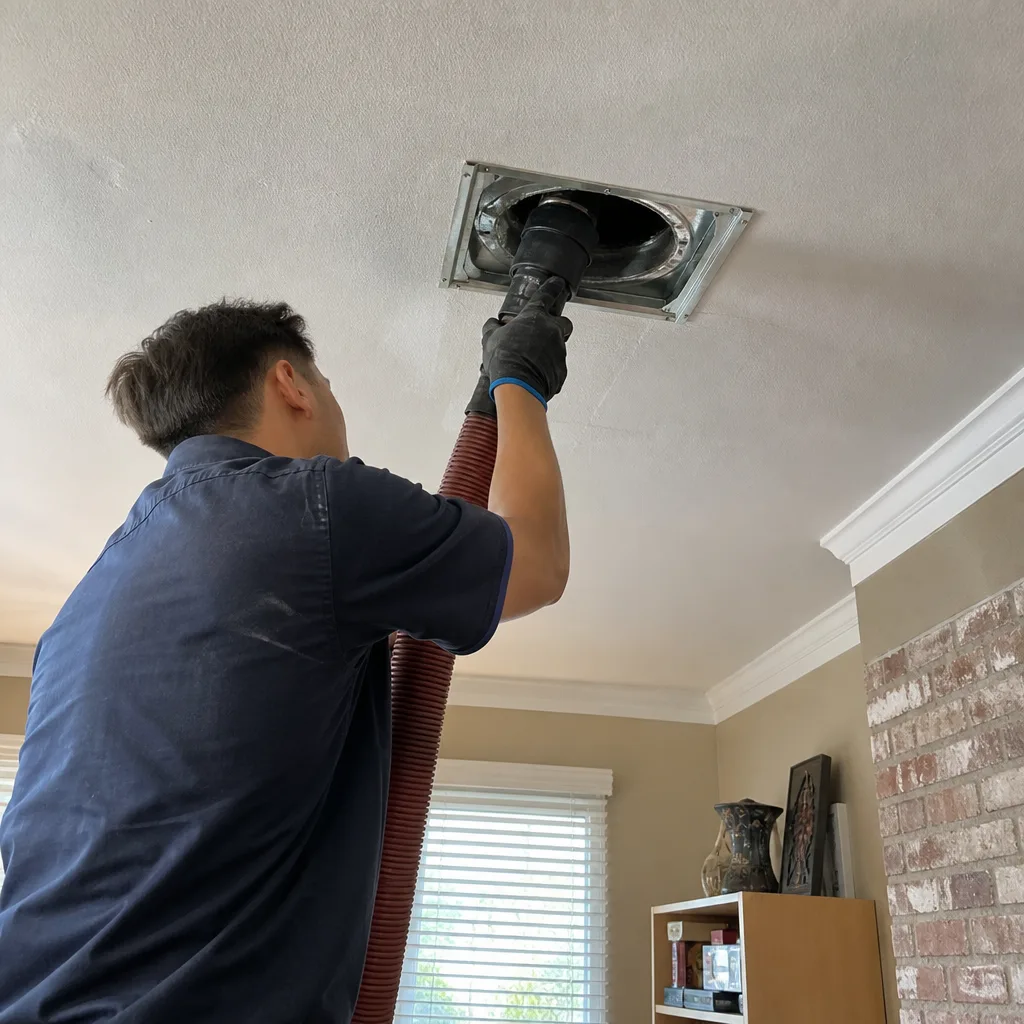
At Cardinal Air Duct West Covina, we hold the line on this. Our crews clean ducts with professional-grade equipment including Rotobrush rotary brush systems and Nikro HEPA vacuums. We do not modify ductwork. If we find damage, we document it, photograph it, and recommend a licensed C-20 contractor. That separation protects you and it protects the integrity of the cleaning work we performed.
How to Verify a Contractor’s CSLB C-20 License in 60 Seconds
Before you let any company touch anything beyond a visual inspection, verify their license. Here is the 60-second process we recommend to every West Covina homeowner:
- Go to the CSLB license check page. Search “CSLB license check” or go directly to cslb.ca.gov and click “Check a License.”
- Enter the license number. If the contractor does not have a license number printed on their estimate, truck, or website, ask for it. In California, any contractor advertising or contracting for work over $500 must display their license number.
- Confirm the classification. The license page will list classifications. For duct modification or replacement, you want to see “C-20 – Warm-Air Heating, Ventilating and Air-Conditioning.” A “B – General Building” license is not a substitute, though some B-licensed contractors sub out mechanical work to a C-20. The key is who actually performs the work.
- Check the status. The license must show “Active” status, not “Expired,” “Suspended,” or “Revoked.”
- Check the bond and insurance fields. An active license should show a contractor bond and workers’ compensation insurance. If workers’ comp shows as exempt, that changes your liability picture if a worker is injured on your property.
This is not bureaucratic overkill. In a 2023 CSLB undercover sting targeting unlicensed contractors in Southern California, investigators cited over 100 unlicensed individuals for illegal contracting activities in a single sweep. The businesses looked legitimate. They had trucks with logos and professional business cards. What they did not have was a license, and when one of them is on your roof or in your attic, the liability sits entirely with you.
What to Do When Your Duct Cleaner Finds Damaged Ducts
This is the moment where homeowners get pressured. A cleaning crew is halfway through your system in West Covina. The lead tech pulls out a phone, shows you a photo of a crushed flex duct in the attic, and says, “We can fix that for a couple hundred more.”
Here is the right play, in order:
- Ask for the photo and the location. A legitimate cleaner will show you exactly where the damage is. Before-and-after documentation is standard for professional work, and the Air Duct Cleaning in West Covina process should always include visual proof. At a minimum, you need to know which duct section is affected and whether it is supply or return.
- Do not agree to any repair on the spot. Say you will have a C-20 contractor look at it separately. If the cleaner pressures you, that pressure is a signal.
- Get the repair quoted by a licensed C-20. A separate quote keeps the repair honest. Most standard air duct cleanings run $350 to $600 for a typical single-family home in West Covina, and repair work should be its own line item on a separate proposal from a properly licensed contractor.
- Ask whether the repair requires a permit. If the answer is no, ask why. Like-for-like replacement of a small flex duct section sometimes falls under a city’s minor repair exception, but in West Covina, any modification to branch lines, plenums, or returns typically requires a mechanical permit. If the contractor says no permit is needed, get that in writing with their license number on the document.
- If a repair is done, ask for the inspection record. After the work, the city should have a closed permit on file. You can verify through the West Covina Building & Safety online permit portal or by calling the department.
This process adds a day or two to your repair timeline. It also protects a six-figure asset. It is the same discipline you would apply to a roof repair or an electrical panel replacement. Your duct system moves the air you breathe through every room in your house. It deserves the same rigor.
Permits, Escrow, and Insurance: Why Unpermitted Duct Work Haunts You Later
Unpermitted mechanical work rarely causes problems in year one. It causes problems in year seven, when the poorly sealed duct joint has been quietly leaking conditioned air for six summers and mold has formed in the wall cavity. Or year ten, when you sell the house and a sharp buyer’s inspector spots non-standard duct modifications and asks for permits. You will not have them. The buyer will negotiate a credit, and that credit will be far larger than the permit would have cost in the first place.
In West Covina real estate transactions, the Seller Property Questionnaire asks specifically about any improvements or alterations made without permits. If you answer honestly and disclose the unpermitted duct repair, you accept a price reduction. If you answer falsely, you have created a legal exposure that can follow you for years after closing.
Here is a harder scenario. A furnace in a West Covina home in the Woodside neighborhood develops a cracked heat exchanger. The homeowner files a claim. During the claim investigation, the adjuster finds evidence of duct modification near the furnace, performed without a permit, with non-UL-listed tape holding sections together. The insurance company denies the claim for the entire HVAC system, not just the modified section, citing the homeowner’s failure to maintain the system to code. This is not hypothetical. Insurance adjusters in Southern California regularly inspect mechanical work after fires, water claims, and carbon monoxide incidents.
The permit is not a tax. It is the cheapest insurance policy you will ever buy on your duct system. A typical mechanical permit for duct replacement in West Covina costs between $90 and $250, depending on the scope. That is the same cost as one dinner out in Los Angeles, and it buys you a record that protects the value of your home and the validity of your insurance policy.
The Owner-Builder Exemption: What It Actually Covers (and What It Doesn’t)
California code allows a homeowner to pull their own mechanical permit and perform work on a property they personally own and occupy. This is the owner-builder exemption. It exists so that a competent DIY homeowner can replace a section of duct without hiring a licensed contractor. It does not exist so that an unlicensed handyman can perform the work under your permit.
Here is what the exemption actually means in West Covina:
- You can pull the permit in your own name.
- You can perform the work yourself, or hire family members or day laborers under your supervision.
- You are personally responsible for the work meeting code.
- You must live in the home for a specified period after the work, or you cannot sell it without disclosing owner-builder work.
Here is what it does not mean:
- It does not mean you can hire an unlicensed worker to do the work under your owner-builder permit. That is illegal contracting, and the CSLB actively investigates these arrangements.
- It does not mean the work bypasses inspection. Owner-builder work still requires the same rough and final inspections.
- It does not exempt you from code compliance. If the inspector finds non-compliant work, you fix it at your own cost.
For a homeowner with real construction competence, the owner-builder route can save labor costs. For everyone else, it’s a false economy. Duct work requires understanding air pressure, sealing standards, UL-listed materials, and support spacing. Most West Covina homeowners we talk to are better served by hiring a C-20 contractor and letting that contractor stand behind the permit.
Permit Costs and Inspection Timelines for Duct Work in West Covina
Let’s put real numbers on this, because vague answers are how homeowners get talked into skipping the permit. These are current ranges for West Covina as of 2026:
- Mechanical permit, simple duct replacement (like-for-like): $90 to $180
- Mechanical permit, multiple branch lines or plenum modification: $180 to $350
- Plan review, when required: $80 to $150 additional
- Rough inspection: included in permit fee
- Final inspection: included in permit fee
Inspection timing in West Covina is generally faster than in Los Angeles proper. Typical scheduling runs 3 to 7 business days out for a rough inspection, with same-week availability common outside of peak summer construction periods. The entire process, from permit application to closed permit, averages 2 to 4 weeks for a straightforward duct replacement.
Compare that to the total cost of a duct replacement job in West Covina, which typically runs $800 to $2,500 depending on scope. The permit represents about 10 percent of the project cost. That 10 percent buys you a permanent record that the work meets code, that an inspector verified it, and that your insurance company knows the work was done lawfully. Skipping it saves roughly the cost of a family dinner and risks a five-figure escrow credit reduction. That math only makes sense if you never plan to sell, never file a claim, and never have a mechanical failure.
Common Mistakes to Avoid
- Letting the cleaning crew “patch” damage during a cleaning visit. A duct cleaning company without a C-20 cannot legally modify ductwork. The offer may sound like a courtesy, but it leaves you with unpermitted work and zero inspector verification.
- Treating “licensed” as interchangeable with “C-20 licensed.” A business may hold a general business license, a D-24 license for equipment, or even a B General Building license, and none of those authorize duct modification. The specific classification is the only thing that matters.
- Assuming the permit will slow everything down to a crawl. In West Covina, permits for simple duct replacement are issued quickly and inspections are scheduled within a week in most cases. The delay is shorter than the time most homeowners spend chasing a contractor who never pulls permits.
- Not asking for before-and-after photos. Professional duct cleaning companies document their work. If a company cannot show you photos of your own ducts before and after the job, you’ll never know what was actually cleaned or what was damaged. This is exactly why the Relay Standard includes before-and-after photo proof on every booking.
- Writing off the owner-builder permit as a path for a handyman. This is the fastest way to end up in a CSLB investigation. The owner-builder exemption is for owners performing their own work, not for unlicensed workers hiding behind a homeowner’s permit.
- Not checking for an open permit during escrow. If you are buying a home in West Covina, ask the city for the mechanical permit history. A clean mechanical record is worth more than a fresh coat of paint.
- Believing a “minor repair” excuse without documentation. If a contractor says no permit is needed, ask for the code section that exempts the work. If they cannot cite one, get a second opinion from West Covina Building & Safety.
See the difference
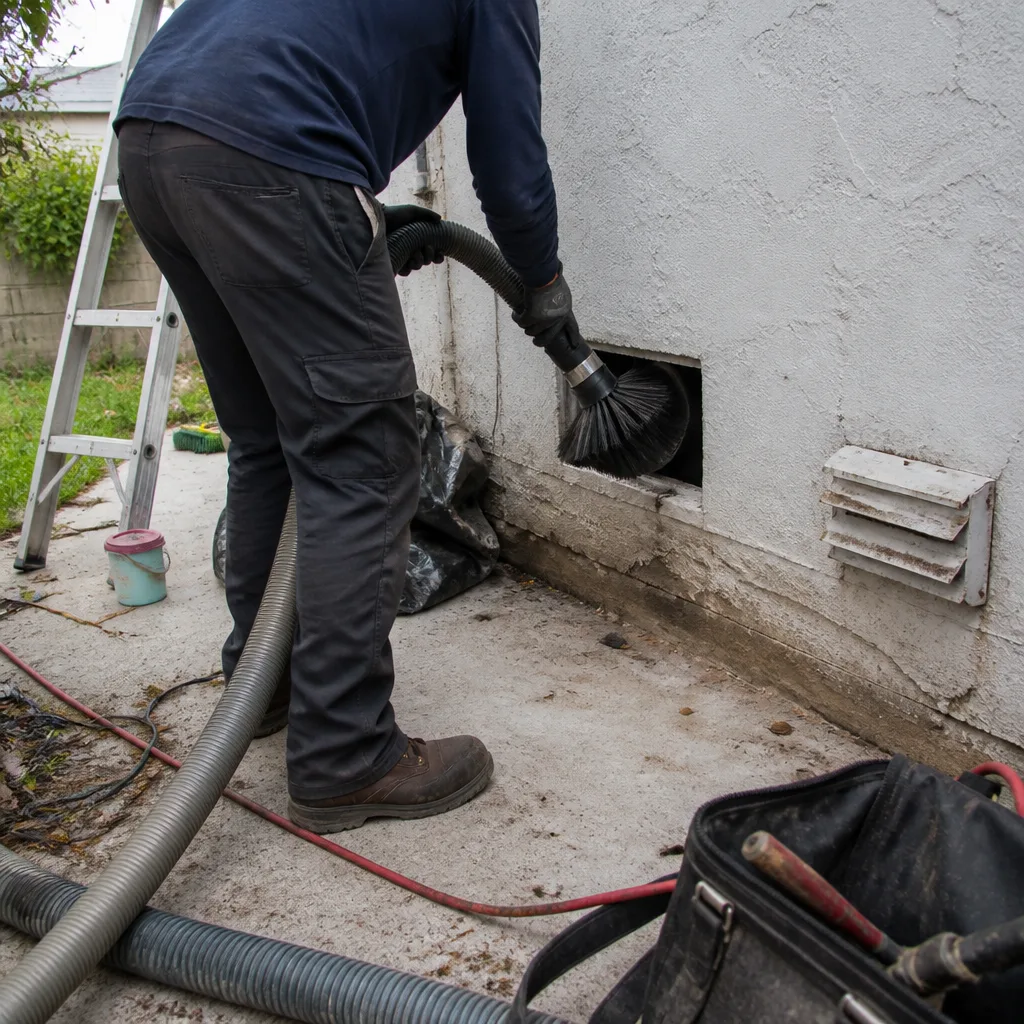 Before
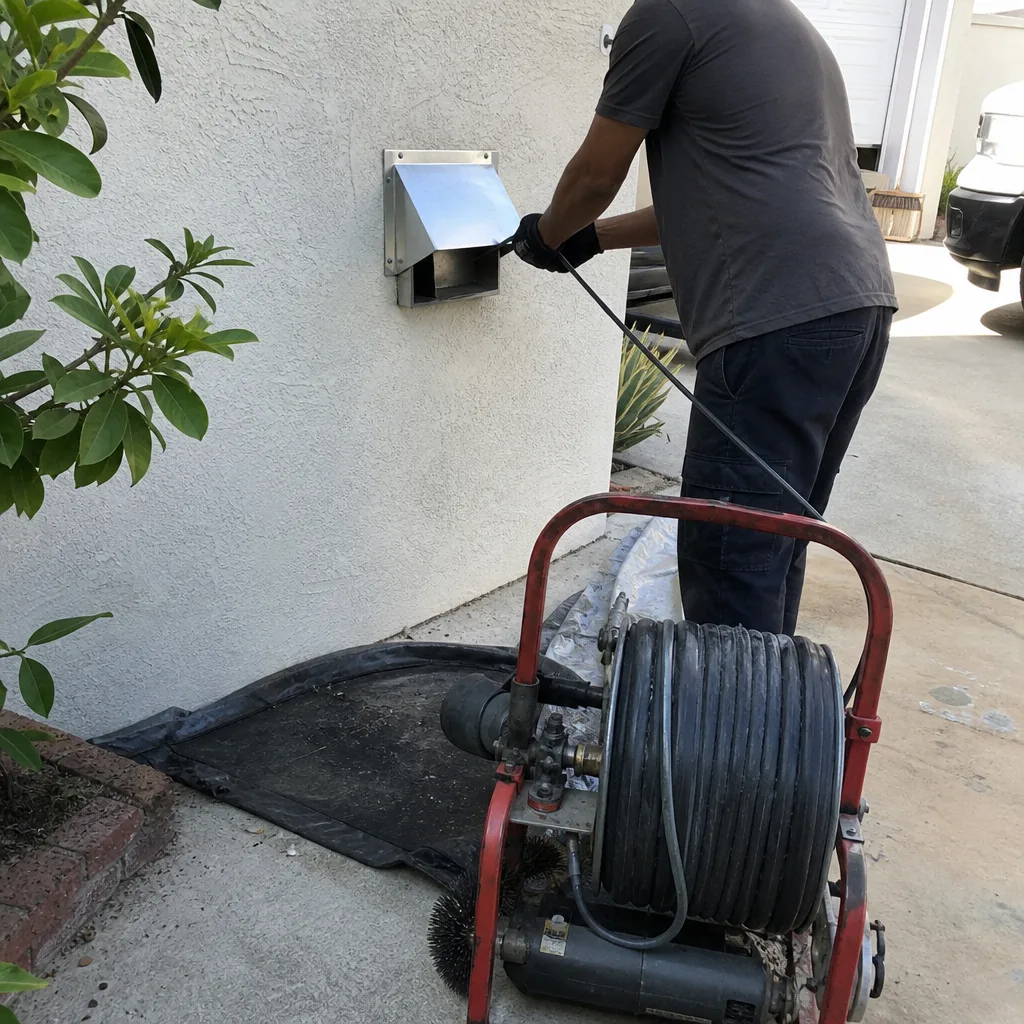 After
After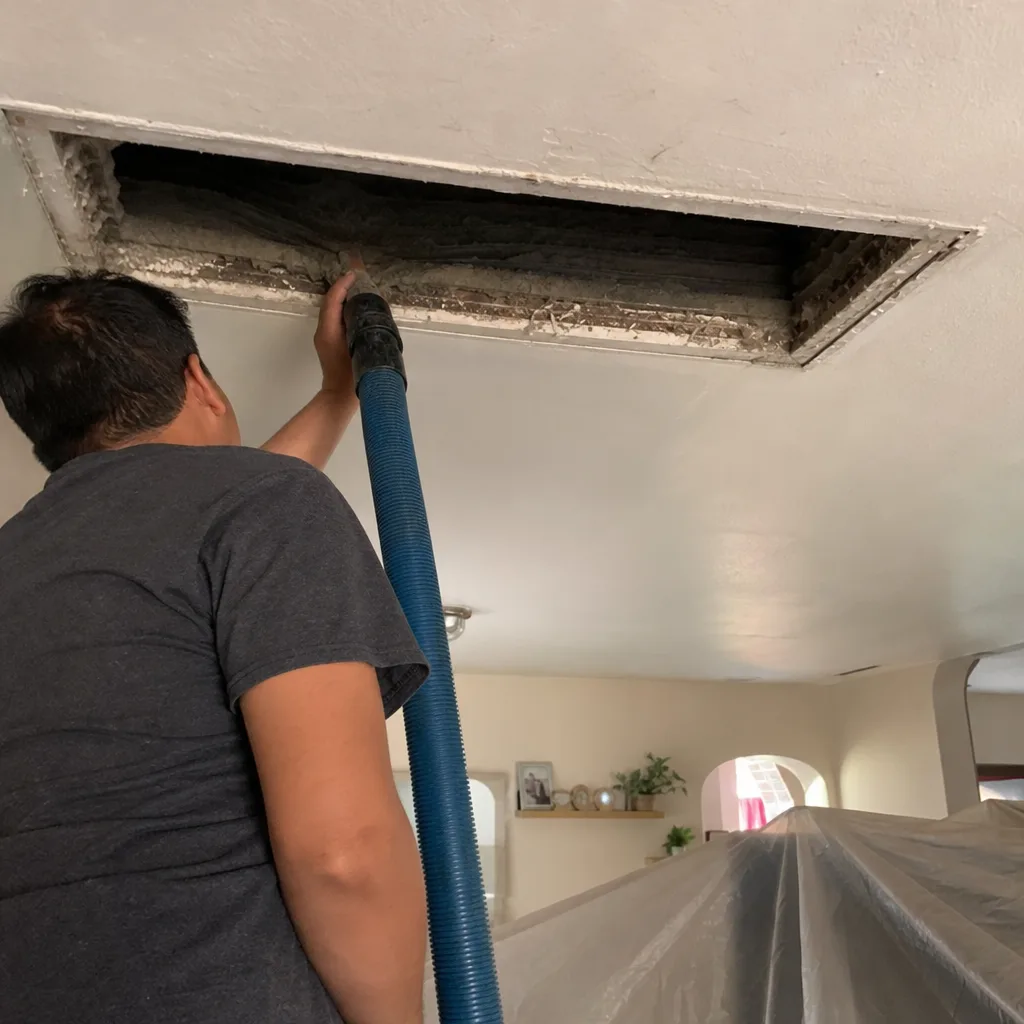 Before
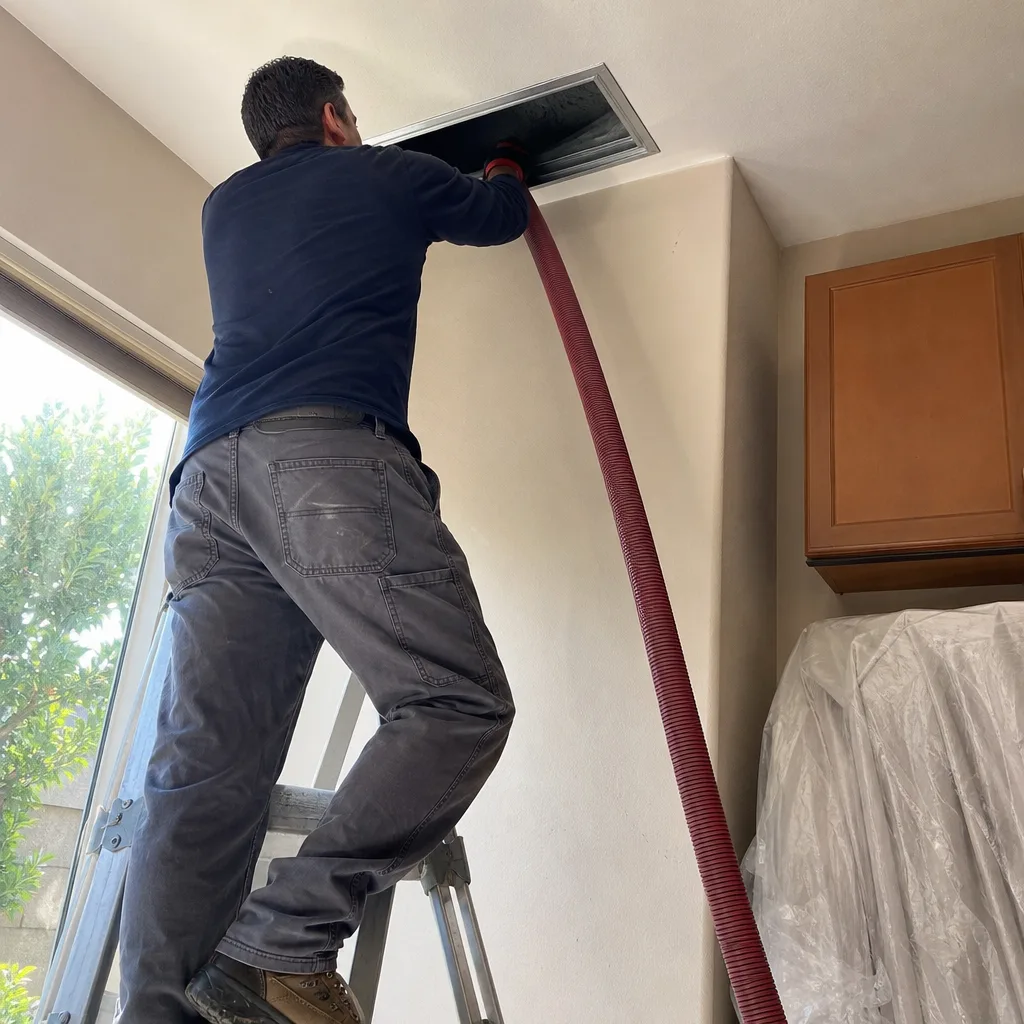 After
After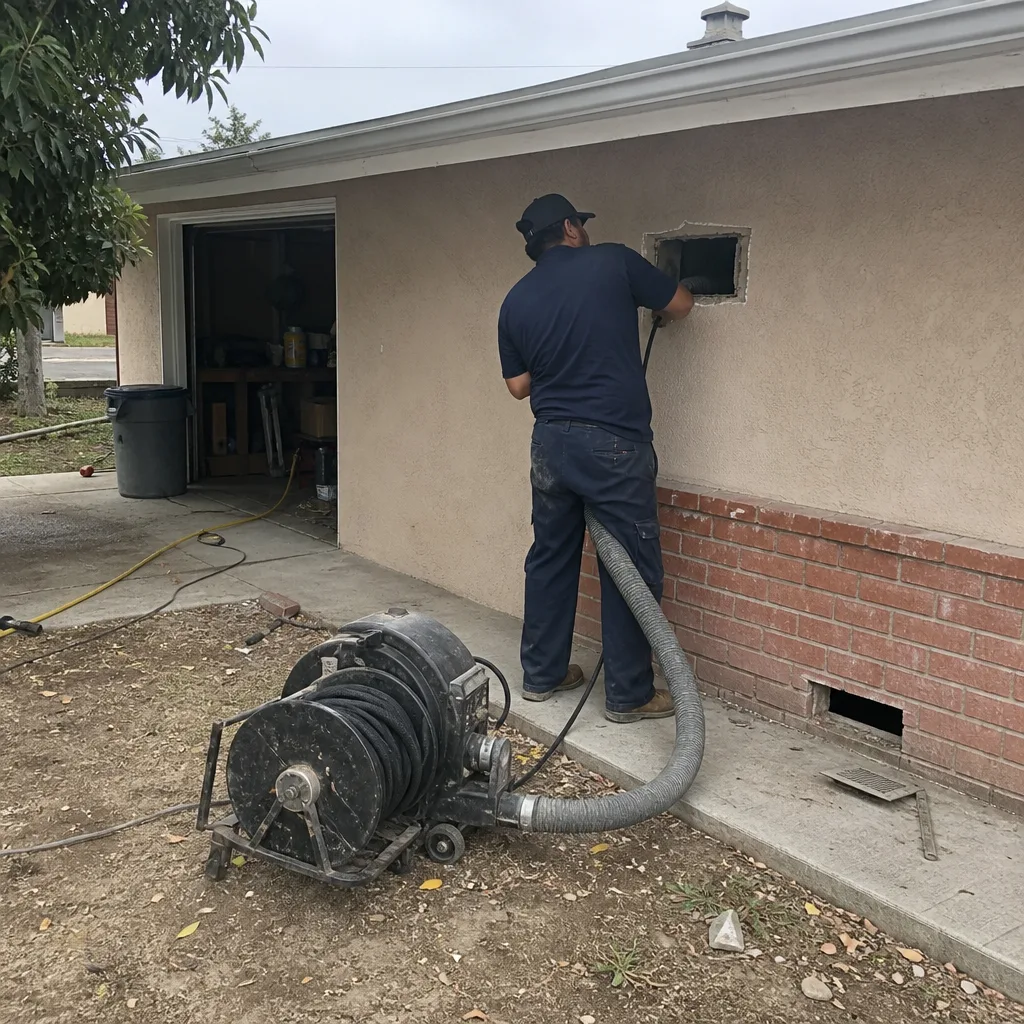 Before
 After
AfterWhen to Call a Professional
Call a licensed professional when any of these situations match your reality in West Covina. If your ducts have never been cleaned in five or more years, if you notice dust accumulating on furniture within days of cleaning, if you have renovated recently and drywall dust has coated your interiors, or if anyone in your home has allergies that worsen at night, your system likely needs cleaning. If you see visible mold, crushed duct sections, or disconnected joints in your attic, you need a C-20 mechanical contractor, not a cleaning company. Cardinal Air Duct West Covina offers free estimates in West Covina and serves surrounding San Gabriel Valley communities. Call (424) 688-1845 to book a duct inspection.
Frequently Asked Questions
No. Air duct cleaning is classified as maintenance, not alteration, under the 2022 California Mechanical Code, so no permit is required anywhere in the state, including West Covina.
Yes. Any repair that modifies, replaces, re-seals, or re-routes ductwork is classified as alteration and requires a mechanical permit from the West Covina Building & Safety Department, unless the city grants a documented minor repair exemption. Call (424) 688-1845 if you need help determining whether your project falls under cleaning or alteration.
A duct cleaning company can only legally repair ducts if it holds a C-20 Warm-Air Heating, Ventilating and Air-Conditioning Contractor license from the CSLB. Most cleaning-only companies do not hold this license and must subcontract any repair work to a C-20 contractor.
Most standard air duct cleanings run $350 to $600 for a typical single-family home in West Covina, depending on system size, duct accessibility, and the number of returns. A written price should be provided before any work starts, and the price should not change at the door.
Visit cslb.ca.gov and use the “Check a License” tool to search by license number or business name. Confirm that the classification shows C-20, the status shows “Active,” and the bond and workers’ compensation fields are current.
Work with a licensed C-20 contractor to obtain a retroactive permit from West Covina Building & Safety. The city may require the duct work to be opened and inspected. If the work fails inspection, the contractor must correct it before the permit can be closed, and that cost becomes a negotiation point in the sale.
No. The owner-builder exemption allows you to perform work on your own home, but you cannot hire an unlicensed person to perform the work under your permit. That arrangement is illegal contracting under CSLB rules and exposes you to liability.
Every 3 to 5 years is the standard recommendation for most West Covina homes, though homes with pets, recent renovations, or residents with respiratory conditions may benefit from more frequent cleaning. The HVAC Cleaning in West Covina page explains the full-systems approach in more detail.
The Bottom Line
Air duct cleaning itself is permit-free in California. What trips up homeowners is the gray zone where cleaning stops and modification begins. The California Mechanical Code draws that line clearly, and West Covina Building & Safety enforces it. A cleaning company that offers to “fix” a duct on the spot is either a C-20 licensed contractor working outside its lane or an unlicensed business creating legal exposure for you. The safe path is simple: hire a professional cleaner for cleaning, verify credentials, insist on before-and-after photos, and route any repair work through a licensed C-20 contractor with an open permit. For more guides & resources on protecting your home, visit our blog. That discipline protects your home’s value, your insurance coverage, and the air you breathe. It also keeps you from being the homeowner who discovers in escrow that a free duct patch cost ten years of liability.
Written by Omar Haddad, Owner at Cardinal Air Duct West Covina, serving West Covina since 2005.
For more on our full-service approach, start at the Cardinal Air Duct West Covina home page or learn about Dryer Vent Cleaning in West Covina for your exhaust systems.