
Last updated October 15, 2026
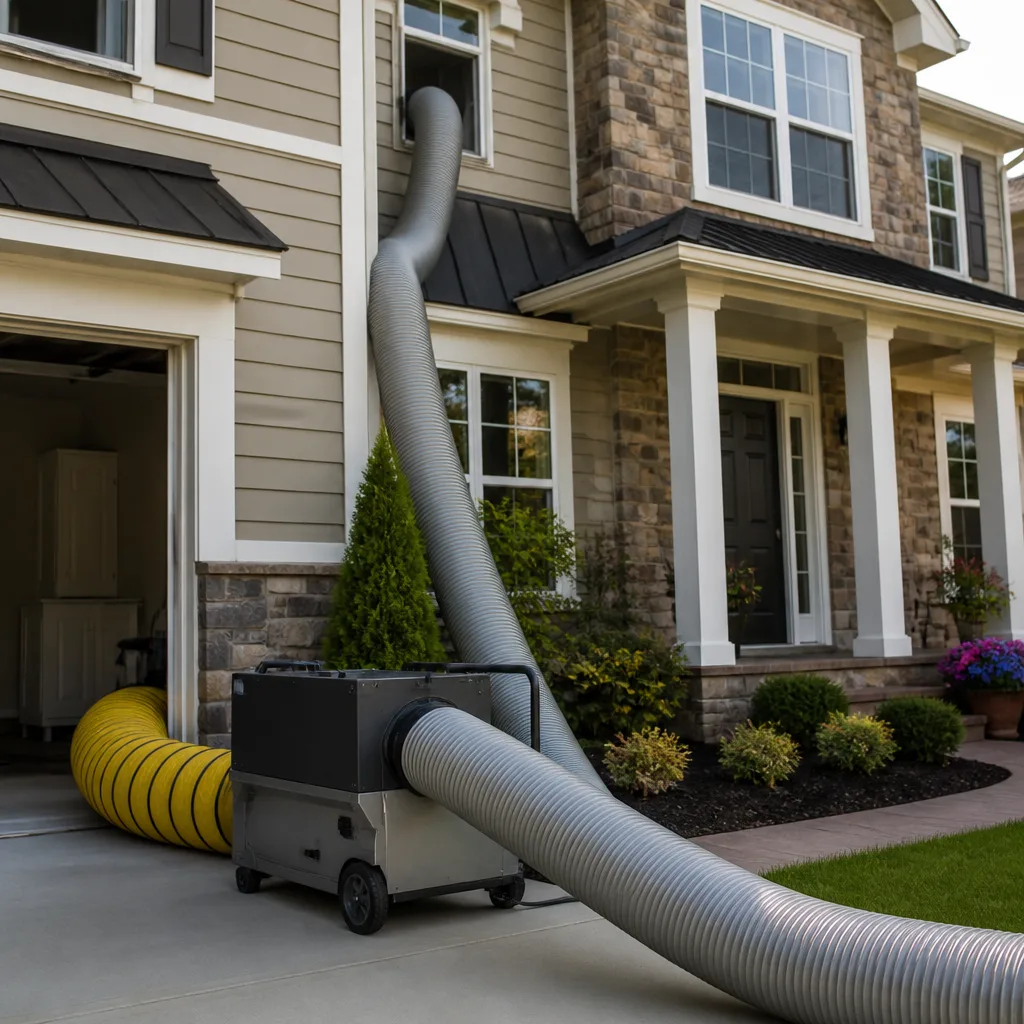 Whole-home duct cleaning
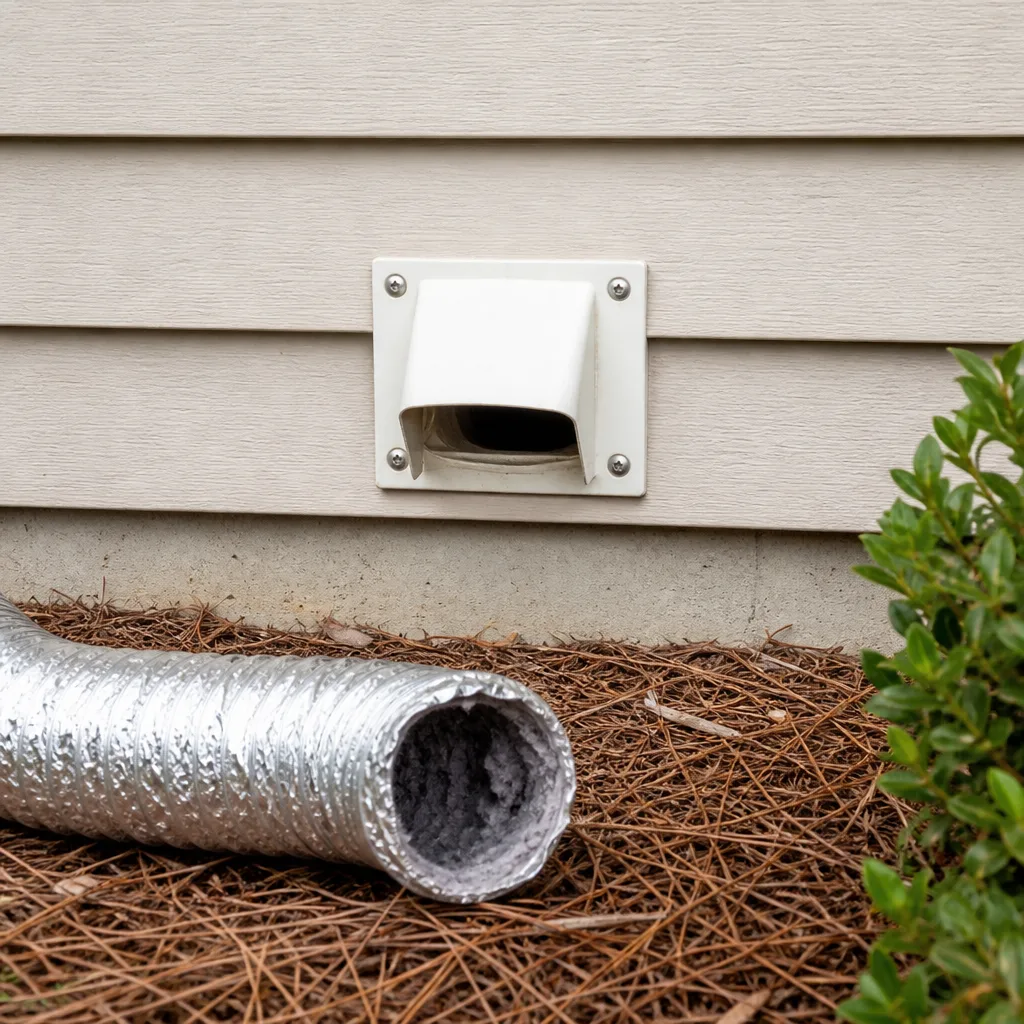 Dryer vent cleaning
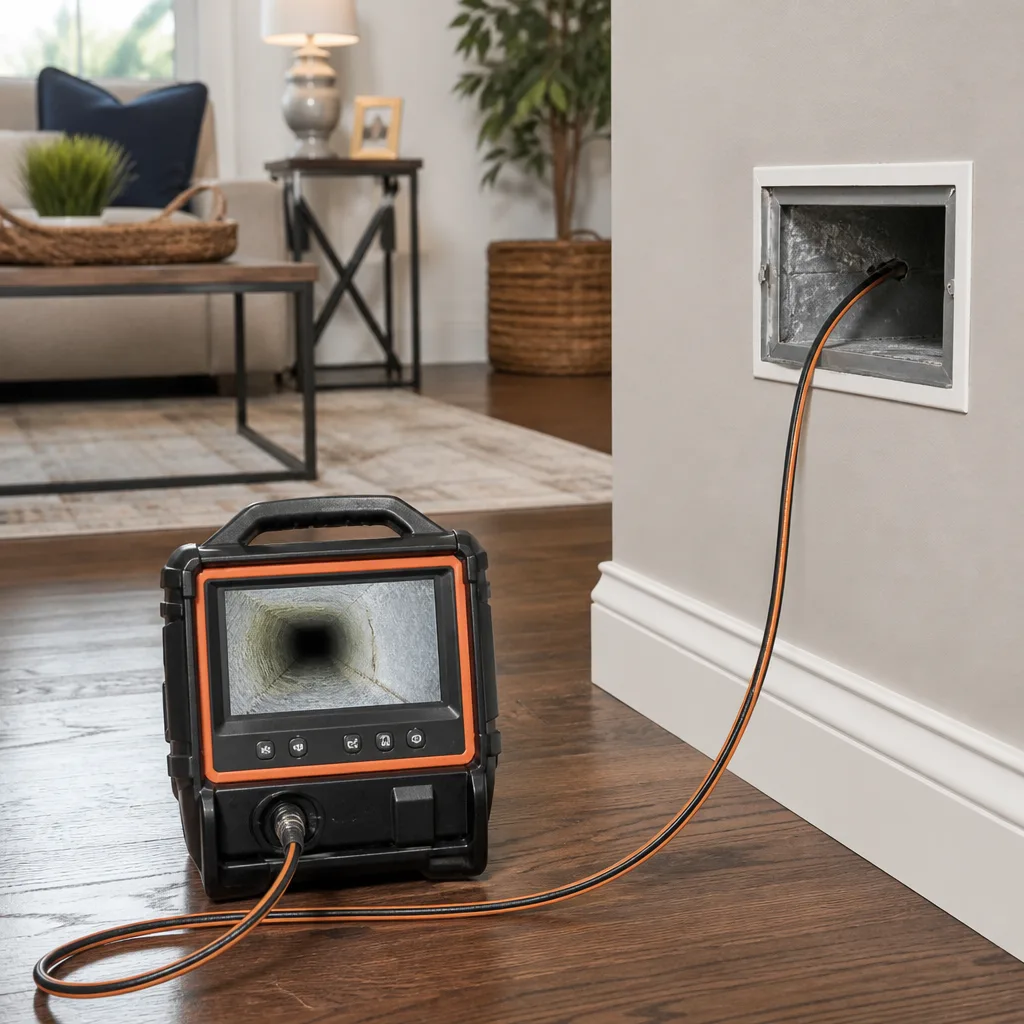 Camera inspection
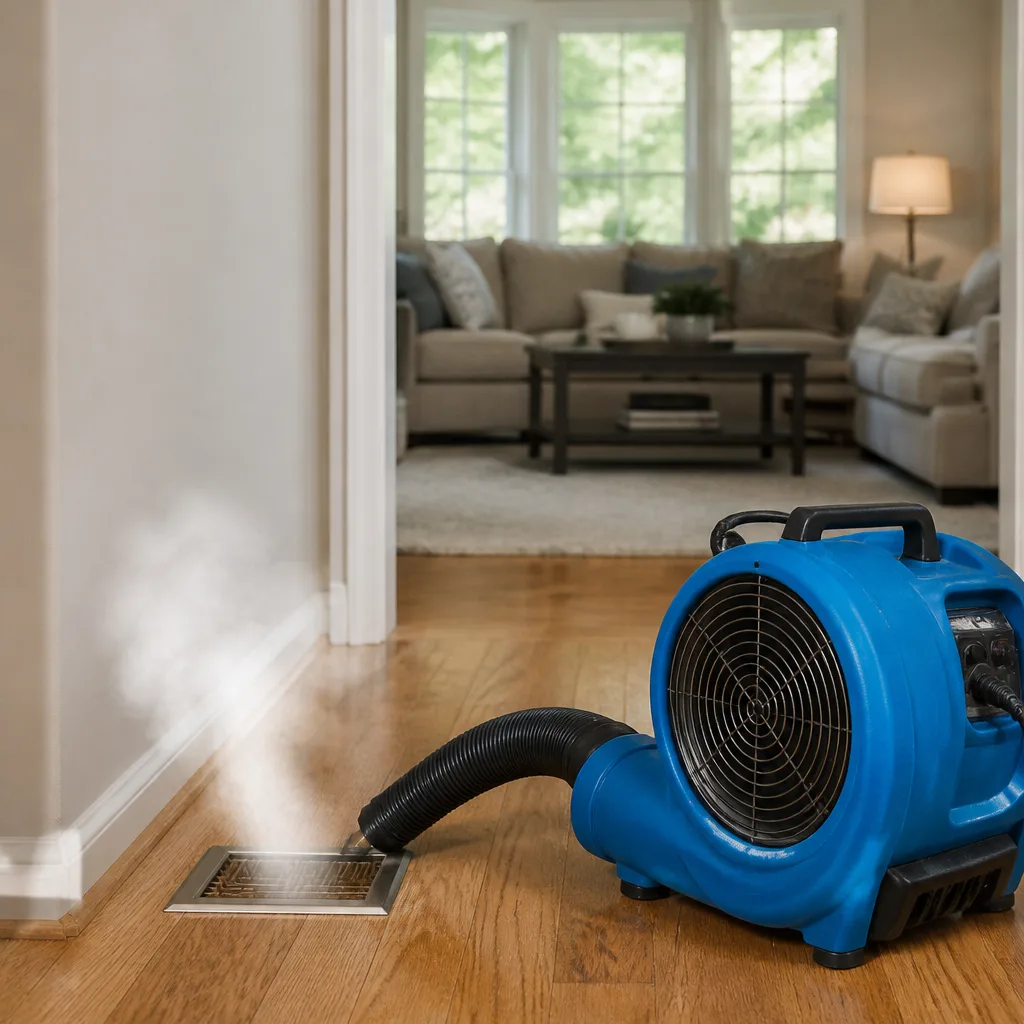 Sanitizing & deodorizing
Whole-system duct and dryer vent check with before-and-after photos - you see exactly what came out of your vents
That "$99 whole-house special" is a bait ad - the real number appears once they are in your hallway, or the "clean" is a shop-vac at the register. We photograph the inside of your ducts before and after instead.
The Complete Guide to Air Duct Cleaning in West Covina
West Covina sits in a spot most duct-cleaning guides don’t account for: the San Gabriel Valley air basin, where the South Coast Air Quality Management District regularly records some of the highest particulate pollution in California. That means the air entering your home is already carrying more fine dust, freeway soot, and combustion byproducts than in most U.S. cities. This guide explains what that means for your ducts, how fast they load up, what our Air Duct Cleaning services actually involve, and how to avoid the bait-and-switch offers that circulate through West Covina neighborhoods every spring.
Quick Answer
Air duct cleaning in West Covina typically costs between $450 and $900 for a standard single-family home, takes 3 to 6 hours, and should include all three airflow zones: supply ducts, return ducts, and the air handler cabinet. Because West Covina sits in the SCAQMD’s high-particulate zone, ducts here accumulate PM2.5, freeway corridor soot, and Santa Ana wind debris faster than in coastal or suburban-average areas. A legitimate job uses negative-pressure containment with HEPA filtration, not a shop vac poked into a vent opening.
Styles & brands we work with
Table of Contents
- Why West Covina’s Air Is Different
- What Actually Builds Up in West Covina Ducts
- How Professional Duct Cleaning Works
- The Three Zones a Real Cleaning Must Cover
- What Air Duct Cleaning Costs in West Covina
- What Before-and-After Photos Should Show
- West Covina Duct Cleaning Red Flags
- Common Mistakes to Avoid
- When to Call a Professional
- Frequently Asked Questions
Why West Covina’s Air Is Different
The South Coast Air Quality Management District, the agency that monitors air quality across the Greater Los Angeles basin, consistently places West Covina in its highest particulate-pollution categories. The city sits directly between two major freeway corridors, the I-10 to the north and the SR-60 to the south, and prevailing winds push vehicle emissions through the valley rather than dispersing them. When the Santa Anas blow in from the desert in fall and spring, they carry fine mineral dust and, in bad years, wildfire ash from the San Gabriels.
What this means for your ducts is straightforward: the air your HVAC system pulls in is dirtier at the source. Your return ducts, the ones that pull air back to the furnace, act like a filter for everything floating through your neighborhood. Fine PM2.5 particles, the kind small enough to stay suspended in air and slip past the standard one-inch furnace filter, settle inside ductwork. Over time, they combine with humidity to form a dense, greasy film that coats duct walls.
Omar Haddad and our team at Cardinal Air Duct West Covina home have cleaned ducts in homes across West Covina, from the older subdivisions near the Plaza West Covina to the hillside streets off Azusa Avenue. The buildup pattern is consistent: homes within a mile of the freeway corridors show darker, oilier residue than homes up in the hills, and homes that run their HVAC year-round accumulate faster than those that only cycle seasonally.
The practical takeaway: if you’re comparing duct cleaning advice written for suburban Ohio or coastal Orange County, it underestimates how quickly West Covina ducts load up. For more guides & resources tailored to local conditions, see our blog. Our climate and geography put you on the faster end of the maintenance curve.
What Actually Builds Up in West Covina Ducts
Most homeowners picture dust bunnies. The reality in West Covina is more complicated, and knowing what’s actually in your ducts helps you understand why a thorough cleaning matters.
- Freeway corridor soot: Diesel particulate matter and tire-wear dust from the I-10 and SR-60 corridors are very fine, slightly oily, and stick to duct walls rather than settling on the floor. This is the dark gray-to-black film we see most often in West Covina homes.
- Santa Ana mineral dust: The fall and spring wind events carry extremely fine desert particulates that infiltrate even well-sealed homes. This dust is abrasive and accelerates wear on blower motors.
- Wildfire ash and smoke residue: When the San Gabriels burn, which is now a recurring seasonal reality, smoke particles get pulled into return ducts and leave an acrid residue that you can smell when the system first kicks on.
- Pet dander and hair: Homes with dogs or cats see dander mix with the oily soot layer to form clumps that reduce airflow at bends and junctions.
- Construction debris from the home itself: Drywall dust from renovations, insulation fibers from attic work, and even small hardware dropped into floor vents find their way into duct runs. This is common in West Covina homes built from the 1950s through the 1980s, where original ductwork had loose joints.
- Mold and biological growth: The San Gabriel Valley’s summer humidity, combined with condensation forming on duct interiors when the AC runs hard, creates conditions where mold spores can colonize. This is more common in homes with undersized or imbalanced systems.
The type of buildup determines the cleaning approach. Dry dust responds to brush agitation. The oily soot film common near West Covina’s freeways needs more aggressive mechanical brushing and HEPA extraction to lift and remove. That’s why equipment choice matters more here than in cleaner-air regions.
How Professional Duct Cleaning Works
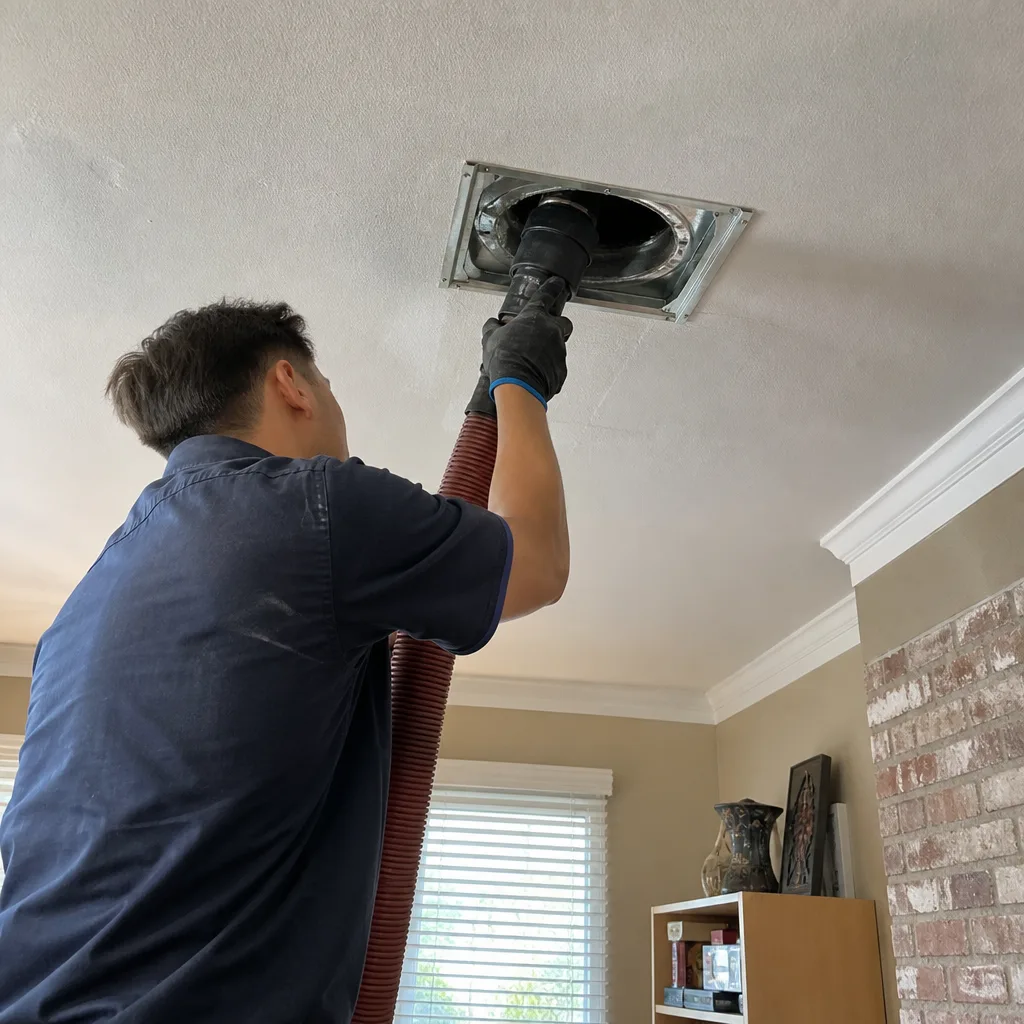
A legitimate air duct cleaning is a mechanical process, not a vacuuming. The industry term you’ll hear is source removal: loosening the debris where it sits, then extracting it from the system under negative pressure. Negative-pressure extraction means the air inside the ductwork is held at lower pressure than the room around it, so debris gets pulled into the vacuum rather than drifting back into your living space.
Here’s the standard professional process, step by step:
- System inspection: The technician opens an access point, usually at the air handler or a return register, and uses a camera to inspect duct condition, identify buildup, and check for leaks, rodent issues, or moisture problems that cleaning alone won’t fix.
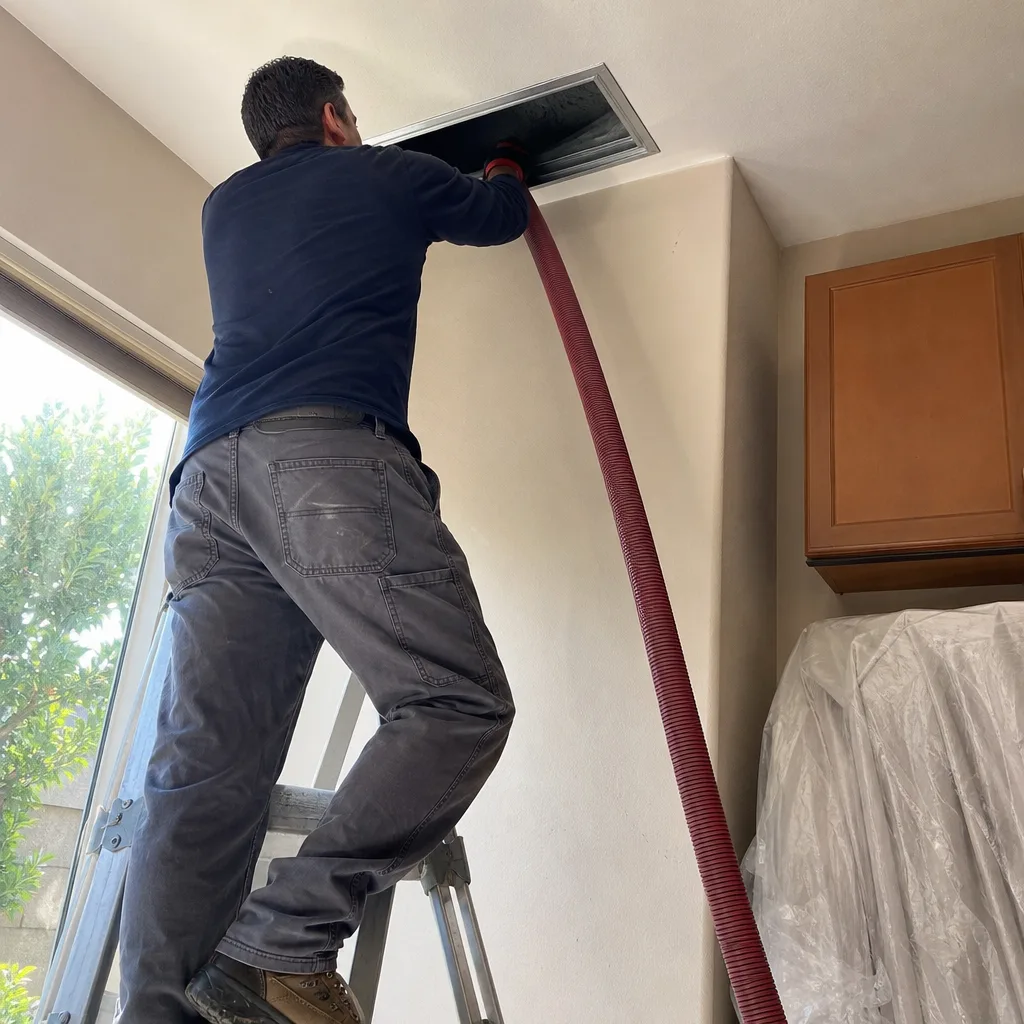
- Containment setup: The technician seals off the air handler and connects a high-powered vacuum unit, typically a Nikro HEPA-rated machine or an Abatement Technologies containment unit, to the main trunk line. This creates the negative-pressure environment before any cleaning begins.
- Supply register sealing: Each supply vent is sealed temporarily, except the one being worked, to maintain airflow velocity through the section being cleaned.
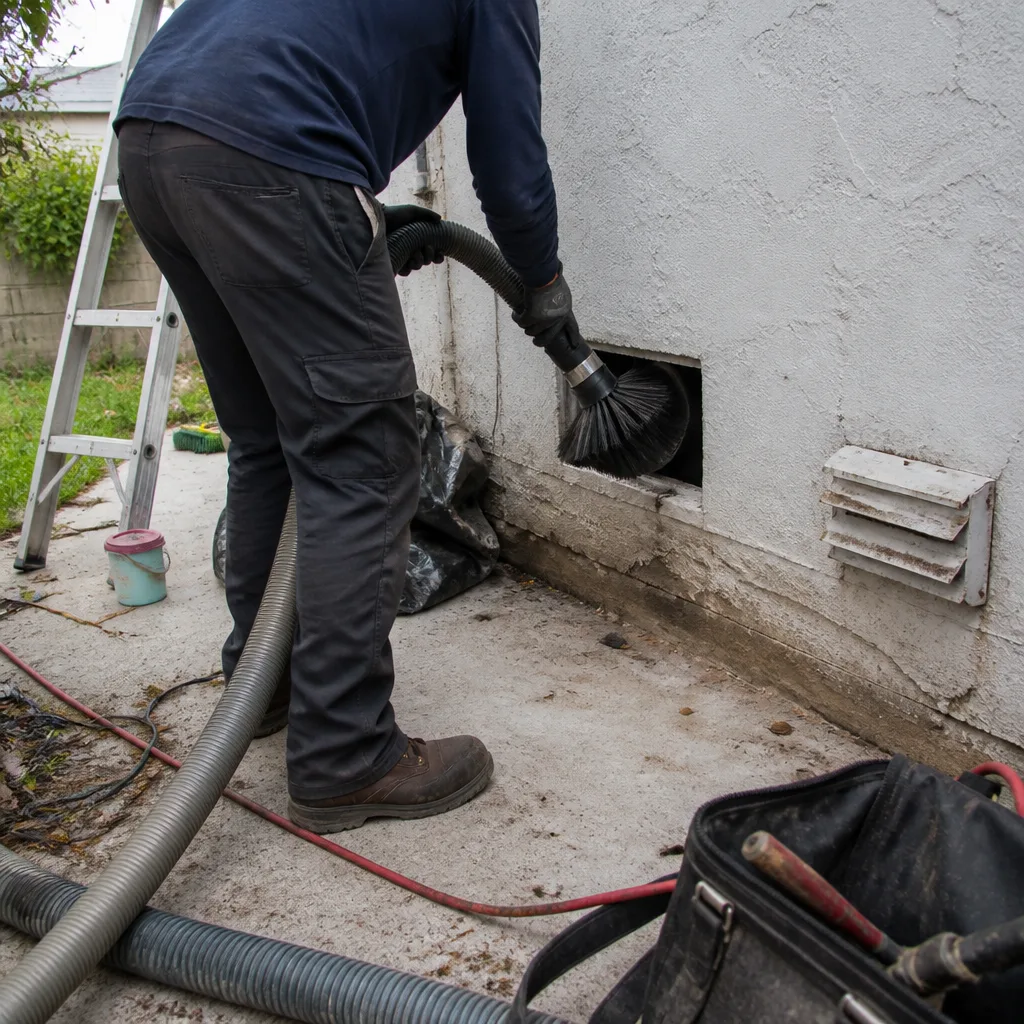
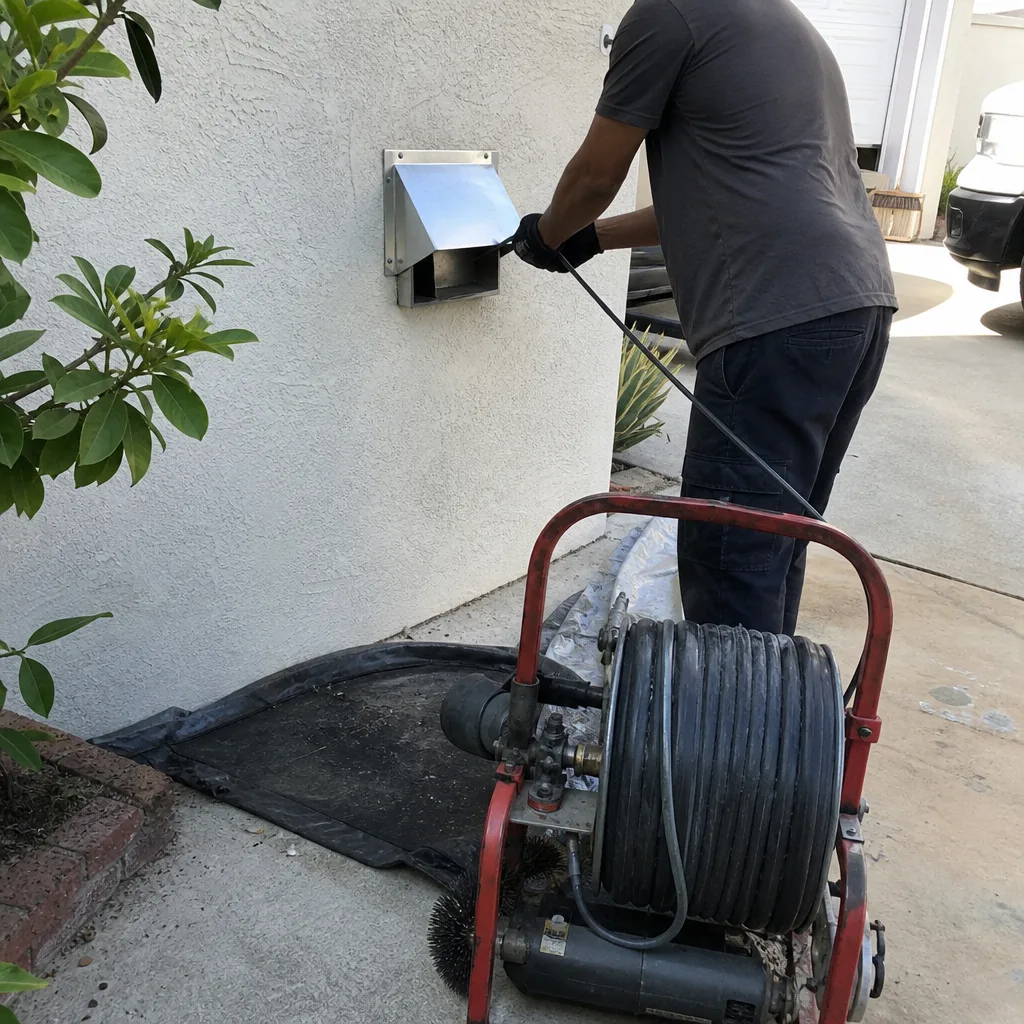
- Mechanical agitation: A rotary brush system, like a Rotobrush, is fed through the duct run. The rotating bristles knock debris off the walls while the vacuum stream carries it back to the collection unit. For heavier buildup, technicians may use compressed-air agitation tools in combination with the vacuum.
- Return duct cleaning: The same process repeats on the return side, which is often the most contaminated section, especially in West Covina homes near the freeways.
- Air handler cabinet cleaning: The blower fan, evaporator coil, condensate pan, and the cabinet interior are brushed and vacuumed. This step is frequently skipped by low-cost operators, but it’s where the most allergenic material concentrates.
- Final walkthrough and photo documentation: The technician shows you before-and-after photos from inside the actual ducts, confirms all registers are reseated, and verifies airflow.
The entire job takes 3 to 6 hours depending on home size and duct configuration. A 90-minute job is a red flag, not a bargain.
The Three Zones a Real Cleaning Must Cover
Your forced-air system moves air through three distinct zones, and any cleaning that skips one leaves the job incomplete. Here’s what each zone does and why it matters in West Covina’s air conditions.
Supply Ducts
The supply ducts carry conditioned air from your furnace or air handler to each room. These are the ducts connected to the floor, wall, or ceiling registers where air blows out. In West Covina homes, supply ducts collect dust that settles in when the system is off and dust that passes through the filter when the system runs. Because the air here has already been “treated” by your filter, buildup in supply ducts is usually lighter than in returns. But Santa Ana seasons change that: fine desert dust infiltrates homes and settles directly into supply registers, then recirculates every time the blower kicks on.
Return Ducts
Return ducts pull air back from the rooms to the air handler. These are the workhorses of your system and, in West Covina, the filthiest zone by far. The air entering your return grilles comes straight from your living space, carrying whatever’s floating inside plus what seeps in from outside. The return side is also where you’ll find the oily freeway soot residue that makes cleaning here a mechanical job, not a vacuum job. If you check your return registers and see a gray-black film on the grille itself, that same film is on the duct walls behind it.
The Air Handler Cabinet
The air handler cabinet houses the blower fan, the evaporator coil when you have central air, the condensate pan, and the filter slot. This is the junction where all air passes through. In our experience, this is the zone most commonly skipped by cheap operators because it requires opening the unit, pulling the blower, and working in a tight space. But the evaporator coil is cold and wet during AC season, which means dust particles stick to it like glue. A coated coil loses efficiency, raises cooling costs, and becomes a mold risk in West Covina’s humid summer months. If you’re paying for a whole-system cleaning, the air handler cabinet is non-negotiable.
Any quote that says “vent cleaning” without specifying all three zones is almost certainly a per-vent bait price that won’t include the air handler work. Ask explicitly: “Does this quote include supply ducts, return ducts, and the air handler cabinet?” A direct yes or no will tell you a lot about the company.
What Air Duct Cleaning Costs in West Covina
Most standard single-family homes in West Covina fall between $450 and $900 for a complete cleaning of all three zones. Larger homes or systems with extensive contamination can run higher. Here’s the breakdown of what you’re paying for:
- Single-family home, 1,200 – 2,000 sq ft, 10 – 15 vents: $450 – $650
- Single-family home, 2,000 – 3,000 sq ft, 15 – 25 vents: $550 – $800
- Larger homes, multi-zone systems, or heavy freeway-soot contamination: $700 – $900+
- Add-on: air handler and coil cleaning as a standalone service: $150 – $300
These ranges reflect West Covina’s market specifically, where labor costs and the extra effort required to remove oily freeway residue put prices slightly above the national average. Be wary of any quote below $300 for a whole-home cleaning. At that price, the operator is either cutting corners on containment and HEPA filtration or planning to upsell you once the ductwork is open.
The price should be written and final before the work starts. At Cardinal Air Duct West Covina, we hand you a written price before a single register is pulled, and that number does not change at the door. No per-vent pricing games, no surprise add-ons, no “while we’re in there” upsells. If a company won’t put the price in writing up front, walk away.
For a home near the freeway corridors or with visible grille buildup, expect to be on the higher end of the range. The extra mechanical work to remove soot film is real work, and any company that charges the same as a cleaner-air market is either cutting corners or doesn’t know what they’re looking at.
What Before-and-After Photos Should Show
Most homeowners are smart to ask for proof. The problem is that a flashlight shot of one vent opening proves nothing. A duct could be perfectly clean at the visible register and caked three feet in. Here’s what legitimate documentation looks like.
A proper before-and-after photo set includes:
- Interior duct shots from inside the run, not from the register opening: The camera should be inserted into the duct and aimed down the run, showing the duct walls. This is where buildup lives.
- Multiple representative locations: At least the main return trunk, one supply branch, and the air handler interior. A single “after” photo of the easiest-to-reach vent is a classic shortcut.
- The same location before and after: Photos of different spots tell you nothing. The after shot needs to show the same section of duct as the before shot.
- Air handler and coil shots: The coil is where hygiene matters most. Photos here, before and after, are a sign the technician actually did the cabinet work.
- Time-stamped evidence: The photos should be from the same visit, not stock images.
This is where the Relay Standard comes in. Every Cardinal Air Duct West Covina booking includes before-and-after photo documentation as part of the job, not as an add-on. You receive the photos along with your digital invoice, which you can pay from a link on your phone. The same standard applies to HVAC Cleaning in West Covina and Dryer Vent Cleaning in West Covina: proof of the work is part of the work.
West Covina Duct Cleaning Red Flags
Every spring and fall, door-to-door crews work West Covina neighborhoods with the same pitch: a whole-house duct cleaning for $49 or $79. The pattern is predictable enough that we’ll walk you through it, because understanding the mechanic of the scam removes its power.
Here’s how bait-and-switch pricing works in practice:
- The hook: A crew knocks on doors in neighborhoods like the ones off Workman Avenue or around Cameron Park, offering a “whole-house special” at a price far below market: $49, $69, $99. The price is for “up to 10 vents” or includes ambiguous fine print.
- The partial job: The crew arrives with a small portable vacuum or a shop vac. They run it through a few supply registers for 20 minutes. No containment, no negative pressure, no return duct work, no air handler.
- The expensive discovery: Once the ducts are “open,” the technician discovers mold, heavy contamination, or a “dangerous” buildup that requires an additional $800 – $1,500 in “sanitizing” or “coating” services. The pressure is on: the job is half done, the tech is in your home, and the extra work is presented as urgent.
- The walk-off: If you decline the upsell, you’ve paid $99 for a useless partial cleaning and still need a real one. If you agree, you’ve paid $1,000+ for a job a professional would have done correctly for $500 – $800, with the “sanitizing” often being a fogger that does nothing.
Door-to-door air duct offers are not a legitimate sales channel for this trade. Professional duct cleaners with real equipment, real insurance, and a local reputation don’t need to knock on doors. If a crew shows up uninvited at your West Covina home, close the door.
Common Mistakes to Avoid
- Hiring on price alone: A $99 whole-house offer is a guaranteed upsell. You’ll either pay more in the end or receive work that does nothing. The floor for legitimate service in West Covina is around $450.
- Accepting a job without a written price: Any company that won’t put the number in writing before the first register is pulled is planning to change it. Insist on a written quote.
- Skipping the air handler: Cleaning the ducts while leaving the coil and blower caked with the same material means the system will redistribute contamination within weeks. Ask if the quote covers the air handler cabinet.
- Assuming a shop vac in a vent is cleaning: A shop vac inserted into a register can reach maybe three feet down a run. Most West Covina duct runs are 10 – 20 feet. Without negative-pressure containment and mechanical agitation, the debris in the middle and far end stays put.
- Not checking for proof: If a company can’t show you before-and-after photos from inside your actual ducts, you have no way to verify the work was done. Demand photo documentation.
- Ignoring the return side: In West Covina’s air conditions, returns are the dirtiest part of the system. A company that only mentions “cleaning vents” and never discusses returns is eliminating the most important half of the job.
- Replacing the filter and calling it done: A new filter catches future particles but does nothing about the layers already coating your duct walls. If your system needs cleaning, a filter change is maintenance, not resolution.
When to Call a Professional
You don’t need to wait for visible dust blowing out of a register to justify a duct cleaning, though that’s certainly a sign. Specific triggers include: a new home purchase where the previous owner’s maintenance history is unknown; a renovation that produced drywall dust and debris; a visible gray-black film on return grilles, common near the freeway corridors; a persistent musty smell when the AC runs; an unexplained spike in allergy symptoms among household members; or a system that hasn’t been cleaned in seven or more years. West Covina’s air accelerates the buildup schedule, so if you’re not sure, a camera inspection is a low-cost way to know. Cardinal Air Duct West Covina offers free estimates in West Covina – call (424) 688-1845 and we’ll take a look.
Frequently Asked Questions
Air duct cleaning in West Covina costs between $450 and $900 for a standard single-family home, with larger homes or heavily contaminated systems running higher. The price should cover supply ducts, return ducts, and the air handler cabinet, and it should be written and final before work begins. Call (424) 688-1845 for a free estimate on your home.
Cheap quotes are almost always partial jobs used as a foot in the door for a high-pressure upsell. The $49 – $99 offers that circulate through West Covina neighborhoods typically cover a tiny portion of the work, exclude the returns and air handler, and lead to a “discovery” that requires hundreds or thousands more. If the price is far below $400, you’re not comparing the same service.
Demand before-and-after photos taken from inside the ducts themselves, in the same locations, including the air handler. A flashlight shot of a vent opening proves nothing. The Relay Standard includes this documentation as part of every Cardinal Air Duct West Covina job – you see the inside of your ducts, before and after, with your own eyes.
In West Covina’s air basin, every 3 to 5 years is a reasonable interval for most homes. Homes within a mile of the I-10 or SR-60 corridors, homes with pets, or homes where anyone has allergies may benefit from every 2 to 3 years. The five-to-seven-year advice common in national guides assumes cleaner outdoor air than West Covina actually has. For related maintenance, see our Dryer Vent Cleaning Maintenance Checklist for West Covina Homeowners.
It can meaningfully reduce the amount of particulate matter recirculating through your home, especially if your ducts have accumulated freeway soot, pet dander, or pollen. That said, it’s not a cure for allergies, and homes with severe issues may also benefit from improved filtration, like a Honeywell or Aprilaire media filter system.
Legitimate cleaning with proper negative-pressure equipment from companies like Nikro or Abatement Technologies is safe for your system. The risk comes from aggressive improvised methods or excessive air pressure that can damage duct joints, especially in older West Covina homes with original sheet-metal ductwork. A professional should inspect the system first and adjust approach based on duct condition.
The Bottom Line
West Covina’s location in the San Gabriel Valley air basin means your ducts work harder and load up faster than in most of the country. A legitimate cleaning here is a mechanical, source-removal process covering supply ducts, return ducts, and the air handler cabinet, with a written price and photo documentation as standard. The cheap door-to-door offers that circulate through the city are designed to separate you from a small amount of money up front and a large amount later. If you want the job done right the first time, with proof, at a price you agreed to before the work started, call Cardinal Air Duct West Covina at (424) 688-1845. Omar Haddad and our team serve the entire West Covina area and we’ll show you exactly what’s in your ducts, what we’ll do about it, and what it costs – all before a single register is pulled.
Written by Omar Haddad, Owner at Cardinal Air Duct West Covina, serving West Covina since 2005.
See the difference
 Before
 After
After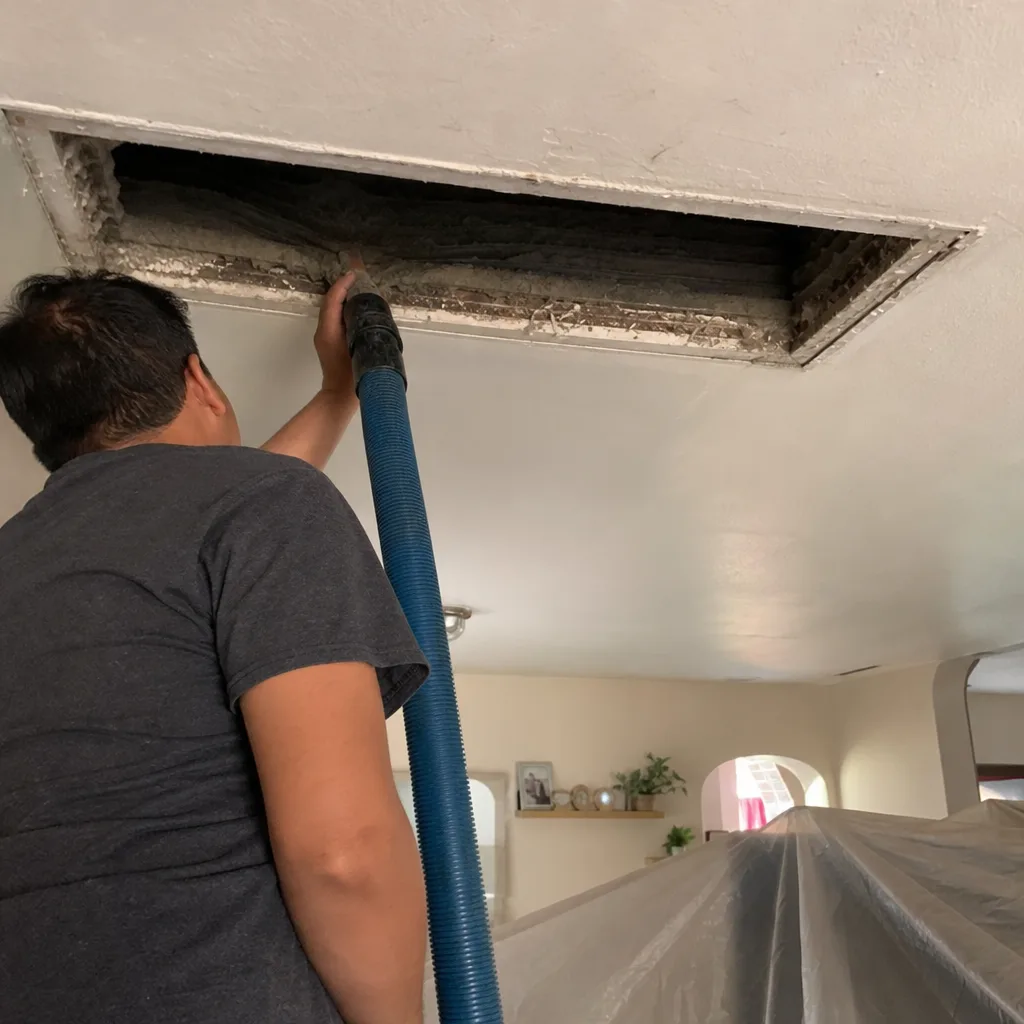 Before
 After
After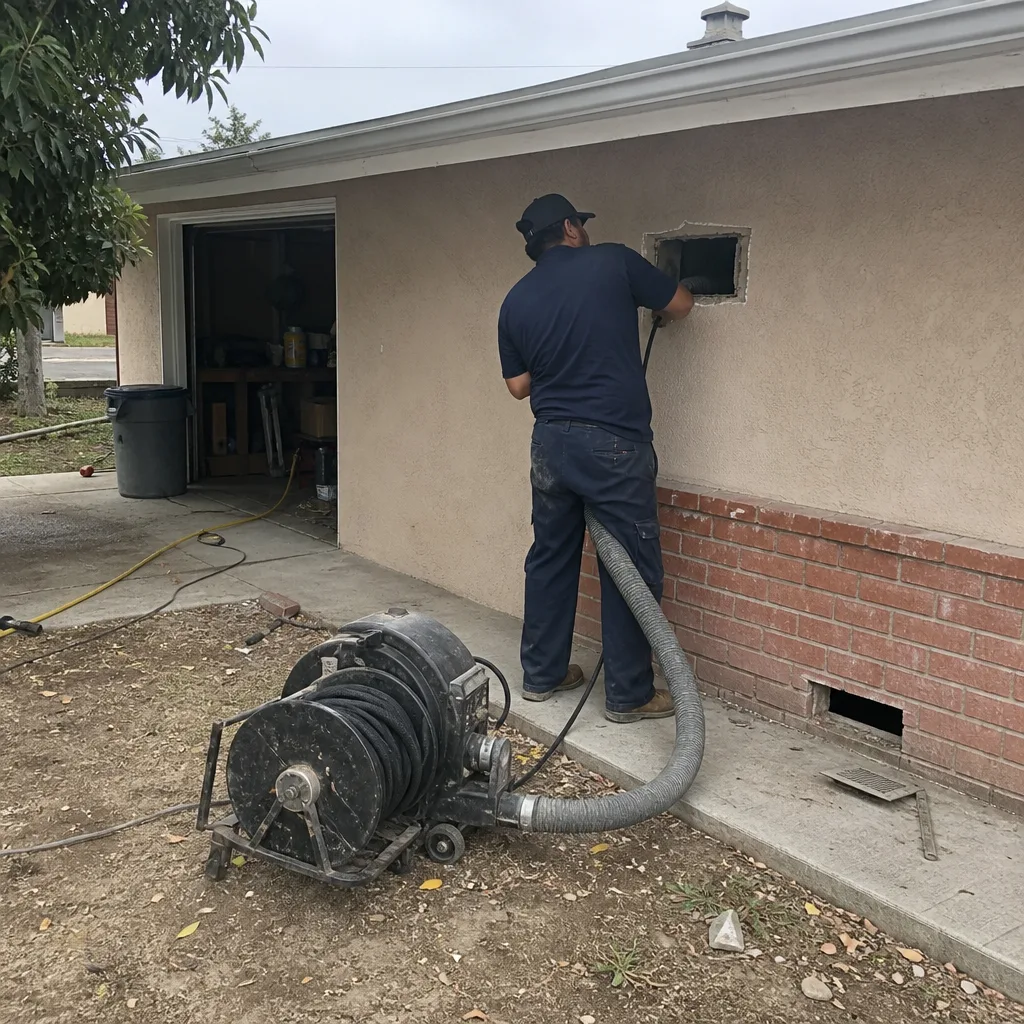 Before
 After
After